


The factory messages to say the goods are ready. You ask what air freight to Los Angeles costs. Half a day later the answer comes back: six dollars a kilo.
Three hundred kilos, eighteen hundred dollars. You do the sum, say yes, and don’t ask what the six dollars includes.
The bill arrives two months later. Twenty-four hundred. Not one line of it is invented. Every charge sits on a rate sheet — the sheet you didn’t ask for.
This piece is about where that six hundred came from.
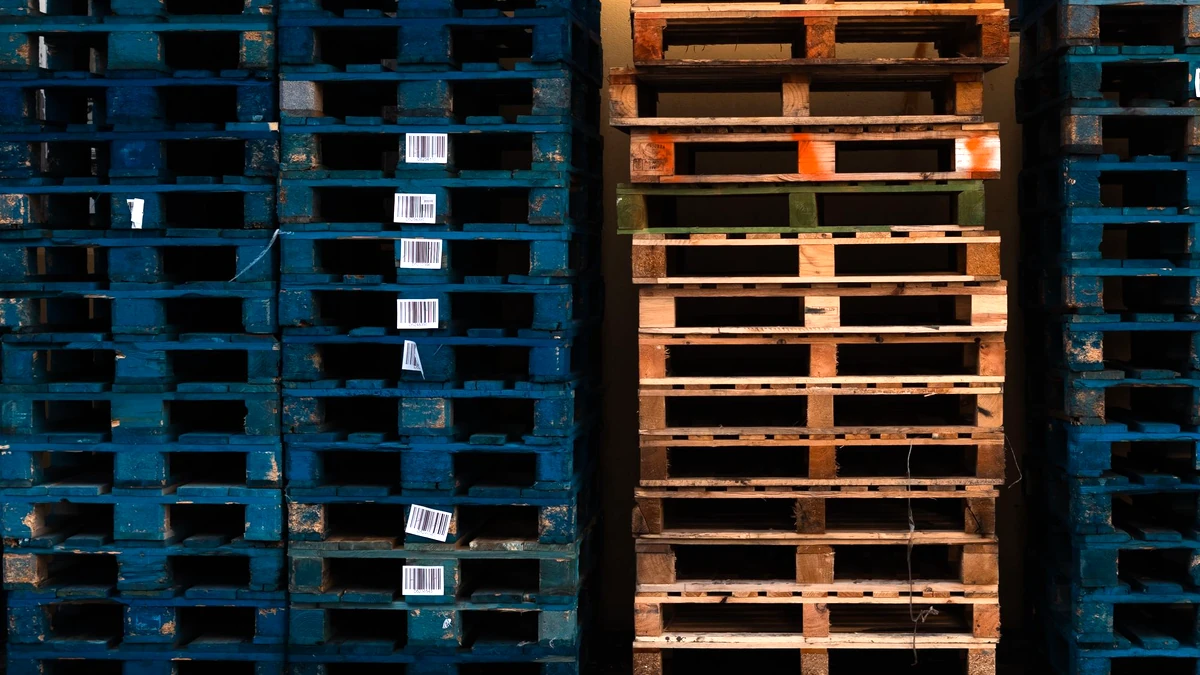
Two quotes, and why the cheaper one ends up dearer
One forwarder says five twenty. Another says six eighty. You take five twenty, and at delivery you discover five twenty was the expensive one.
Nobody cheated. The two numbers answer different questions.
Five twenty is airport to airport: the flight between two airports and nothing else. Six eighty is door to door: factory pickup, export declaration, destination clearance, last-mile delivery, and on DDP terms the duty and import VAT on top of all of it.
There’s a quieter version of the same gap. Both quotes say door to door, but one includes the fuel surcharge and the other doesn’t. Fuel is the most volatile line on the sheet, adjusted monthly, and not a small share of the total. The extra that lands on your bill has a name — fuel surcharge adjustment.
The trade term is where this usually starts. Plenty of air shipments out of China are still quoted FOB, which is an ocean term written for a ship’s rail. FCA is the term built for cargo that flies: the supplier hands over at their premises or at the forwarder’s warehouse, and risk passes at that point. It only matters on the day a pallet is damaged in the truck between factory and airport and both sides assume the other is paying for it.
One question clears most of it: does this include fuel, does it include destination charges, and is it to the airport or to my warehouse.
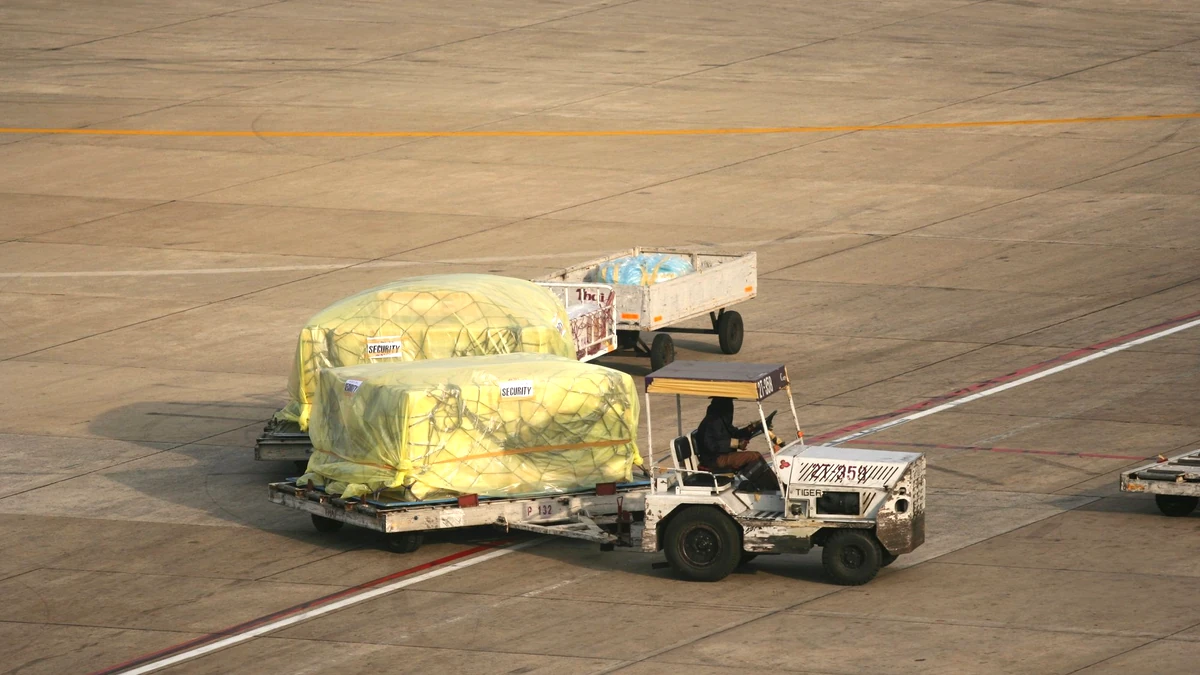
The airline doesn’t weigh your goods
A cubic metre of cargo is charged at 167 kilos.
That’s the IATA convention: length × width × height in centimetres, divided by 6,000. Some lanes use 5,000, and the same carton suddenly carries a fifth more volume weight. Ask which divisor applies before booking — a better use of a phone call than arguing at the warehouse afterwards.
Two shapes come up constantly.
Hardware from Dongguan: one carton, 42 kg actual, outer box 40 × 30 × 25 cm. Volume weight 5 kg. Actual weight wins, and it’s charged at 42.
Cushions from Foshan: one carton, 9 kg actual, outer box 60 × 50 × 40 cm. Volume weight 20 kg. The same carton, more than double the chargeable weight, billed at 20.
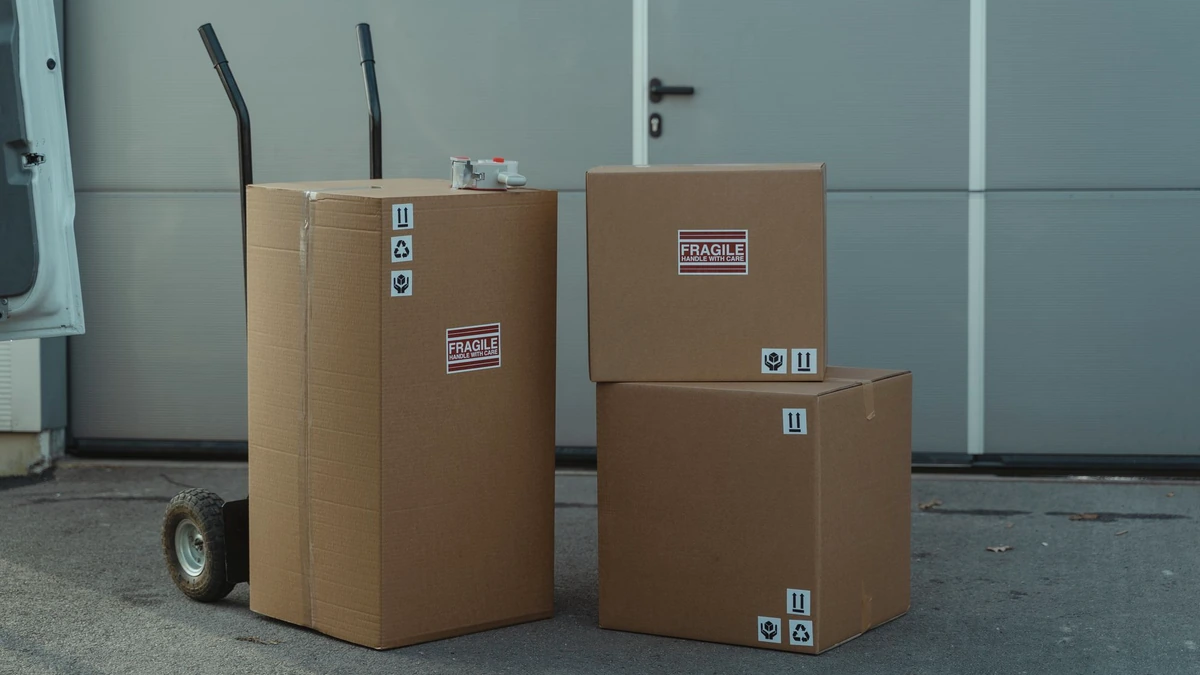
Buyers see that number and conclude the forwarder is padding the bill. It isn’t. The carton is mostly air. When volume weight runs at more than double the actual weight, the cargo has stopped being freight and started being space — which is roughly where sea begins to win, and the LCL guide covers where that crossover sits.
There’s a second number worth knowing. Air rates are quoted in weight breaks — under 45 kg, 45, 100, 300, 500, 1,000 and up. Each break carries a lower rate per kilo, and the arithmetic doesn’t always run the way you expect. A 42 kg shipment billed at the 45 kg break can come out cheaper than the same cargo billed at 42 kg on the under-45 rate. Ask the forwarder to price your goods at the next break up as well. It takes two minutes and occasionally saves money.
One check most people skip: the dimensions used are the outside of the carton. A full box bulges, two wraps of stretch film add another layer, and every number moves. Net weight and “about this size” from the factory, re-measured at the forwarder’s warehouse, routinely produce a volume weight 20–30% higher. Have the factory measure the packed carton, not the empty one.
A quote runs six to eight lines. You read the first
Because only the first line carries a per-kilo figure.
Below it: fuel surcharge, security and ground handling, documentation and declaration, destination charges, delivery. Base rate moves with capacity and season, fuel is adjusted monthly, and those two together are the bulk of the bill. The local charges look small one by one and rarely stay small in aggregate.
So don’t ask for a total. Same shipment, same destination, same delivery date — get three itemised quotes and lay them side by side. The difference shows up on one line, and it’s rarely the line you were watching.
One more thing the quote won’t tell you, because it isn’t a price at all. Air cargo travels on an air waybill, and an air waybill is not a document of title. An ocean bill of lading lets a bank hold the goods against payment; an air waybill doesn’t. Once the cargo is on the plane it is effectively released to the consignee, which means the payment terms that work on a sea shipment — documents against acceptance, a sight letter of credit — need rethinking before anything flies. If your security on a sea order comes from holding the bill, air removes it. Collect the balance before departure, or accept that you’re extending credit.
Where the market sits
Drewry publishes an airfreight price index every month. The edition dated 30 October 2026 put the global average at USD 4.12 per kilo, up 3% on September and the highest since June. The transpacific eastbound lane rose 5%.
The number is real. It also isn’t your price. The basis is 44 major East–West routes, shipments above 1,000 kg, airport to airport, at the buy rate a forwarder pays an airline.
Capacity on these lanes is tight this year. DHL’s August air freight market update reported China–Europe freighter capacity down roughly 30% since June, with Asia–US load factors pushed towards 90%. Tight capacity doesn’t produce falling prices, which is why the October index was still climbing.
A 300 kg shipment moving door to door sits well above that figure, because small consignments carry minimum charges and the local costs have nowhere to spread.
Take one shipment through the arithmetic. The figures are invented; the method isn’t.
Dongguan to Los Angeles, 300 kg actual, 1.8 cubic metres, door to door. Volume weight 1.8 × 167, just over 300 kg — close enough to actual that chargeable weight stays at 300. Airport to airport at an assumed USD 6.20 per kilo: USD 1,860. Export declaration, pickup and airport handling: 150 to 250. Destination clearance and delivery: 250 to 400. Goods value, rounded for the example: USD 12,000. Duty estimated at 25%: USD 3,000.
Freight and local charges: 2,300 to 2,500. Landed, duty paid: 5,300 to 5,500.
Freight is roughly a third of the landed total. The other two thirds are duty and local charges — the part nobody looks at.
The goods value and the duty rate are estimates, there to make the arithmetic run. They aren’t a quote. Your actual rate depends on the code you declare under, and reclassifying a single product can move the landed cost by several thousand dollars.
On time, only a rough answer is honest: most door-to-door shipments from South China to the US West Coast, the US East Coast or Europe land somewhere between one and two weeks. Which day depends on that week’s capacity, how quickly destination customs clears, and where you sit in the delivery queue. Any one of those slips and the date moves. Peak season from August to November, and the weeks before Spring Festival, need a wider buffer. A firm delivery date is a reference, whoever gives it to you.
Some cargo doesn’t get on the plane at all
The forwarder calls to say it can’t fly. The shipper’s first thought is that somebody wasn’t paid enough. Usually it isn’t that.
The cost isn’t just a rebooking either. Cargo sits in an airport warehouse accruing storage by the day, the flight is missed, the next slot may be days away, and the delivery date the customer was promised collapses with it.
Lithium batteries are the first wall. Standalone cells are UN3480; cells packed in or with equipment are UN3481; both need UN38.3 test documentation, and standalone cells also need a controlled state of charge and short-circuit protection in the packaging. Confirm with the airline before booking — whether it will take the cargo, how much, and on what paperwork. Not at the airport.
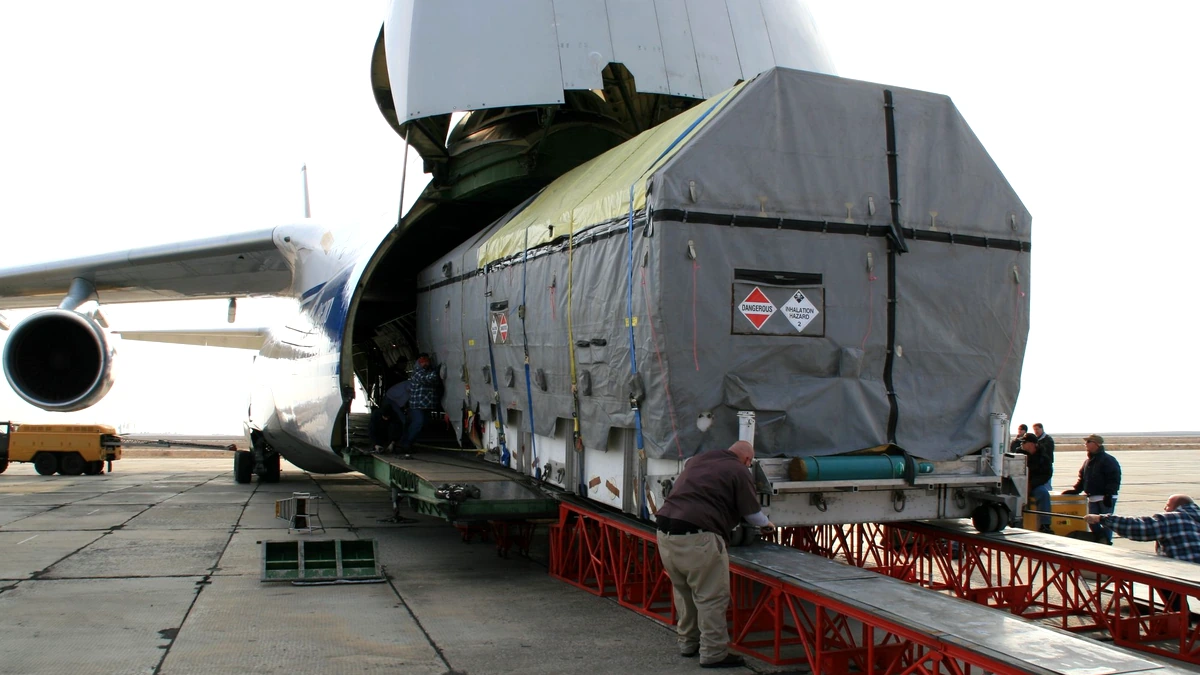
Magnetic goods are the second. Speakers, motors, anything with a magnet inside: above the field limit it doesn’t load, so either a magnetic inspection or demagnetisation.
Liquids, powders, pastes, cosmetics, food and medicines are mostly restricted categories. They need a composition analysis or a non-dangerous goods certificate, and general cargo channels won’t take them.
Compressed gases, flammables and explosives: not accepted.
Oversized and overweight pieces are priced and scheduled separately, and pallet dimensions, cargo door limits and handling equipment all need confirming in advance.
For an electronics factory in Shenzhen, all of this belongs in the booking conversation, not at the cargo terminal.
When not to fly
Low-value, high-volume goods: air freight is a straight loss. A carton of plastic storage boxes out of Yiwu worth RMB 200, air freight at RMB 360. There’s no argument to be made.
More common is the shipment that simply isn’t urgent. Buyers describe “I don’t want to wait” as “I can’t wait”, then pay three times the freight. Thirty days by sea, a week or so by air — do those extra three weeks actually affect the sale? Worth asking once, honestly. If sea is viable, the sea freight guide breaks down FOB, CIF and DDP and the fees buyers tend to miss.
Then there’s the shipment that’s already late. The selling window has closed, air freight won’t catch it, and paying for speed only brings the loss forward.
Air earns its fee in four cases: high value, small volume, a hard delivery date, or a top-up — most of the order by sea, the shortfall by air. Splitting a shipment needs its own calculation; don’t convert the whole order because part of it is late.
What we do in this chain
One thing to be clear about first: we don’t carry cargo. We don’t book space, we don’t charter, we’re not a forwarder.
So what do we do.
We put several screened forwarders in front of you to choose from, rather than handing over one phone number.
Then we pull their quotes onto the same basis: fuel included or not, destination charges included or not, how many free days at destination, who acts as importer, who pays the duty. Same shipment, same basis — only then does anyone look cheap or expensive. DDP quotes need this most, because a single all-in figure has the most room to hide things.
Then the step before the goods move: we stay on the factory until the commercial invoice and packing list are final. Amounts, quantities, descriptions and codes that don’t match get settled at the destination, at your expense.
Once cargo is moving, the reporting doesn’t stop. Pickup, warehouse intake, departure, arrival, clearance, delivery — you hear from us at each stage. When something goes wrong you get what happened, how far it reaches, and what can be done about it, without having to ask.
The quote itself comes from the forwarder directly, and you’re free to check it line by line. Our job is putting several of them on the same table. Which one you take is your call.
Questions we get asked
Is 300 kg cheaper by air or by sea?
By value, not by weight. Divide the freight difference by the goods value. If that ratio sits below what the capital tied up in transit costs you, go by sea. On USD 30,000 of goods, air usually adds 5–8% of value, and plenty of buyers pay it.
A DDP quote is two or three times the airport-to-airport rate. Is that normal?
Yes. The DDP figure contains duty and import VAT, plus destination clearance and delivery. They’re different products, not competing prices.
Can battery cargo fly at all?
It can, through fewer channels and with more paperwork. UN38.3 report, MSDS, state of charge, packaging method — miss one and it doesn’t move. Requirements also differ between Hong Kong and mainland gateways.
Why do quotes expire so quickly?
Rates and fuel both move. A space price quoted today may not be the same tomorrow, so quotes carry a validity of a few days. That’s the market, not a forwarder hurrying you.
The cargo is held at destination. Who is responsible?
Start with who acted as importer and who filed the declaration. On DDP, the forwarder or their agent is the importer and the responsibility sits there. If you import under your own tax ID, it sits with you. Settle this at quotation stage and put it in writing.
Two things worth doing this month
Measure the outer carton of your next shipment as it will be packed, and run the volume weight once. The total you assumed from that per-kilo rate won’t be the total you get.
Then ask three forwarders for itemised quotes — same shipment, same destination, same delivery date. Lay them side by side. The difference won’t be in the freight rate. It’ll be in the local charges.
For the wider picture of what we handle outside freight, the services page is the place to start.
More on shipping and customs
- LCL vs FCL — where LCL stops being cheaper than a full container
- Customs clearance from China — the four gates and the ten days that decide your bill
- Shipping from China — costs, transit times and the fees nobody quotes
Also worth reading: Greater Bay Area sourcing data — what Dongguan, Foshan and Zhongshan output data actually means.