


The quote comes back. Product, spec, unit price — all roughly where you expected. Then the last line: MOQ 3,000 pcs. You need 500.
That’s a 2,500-piece gap, and it stalls more deals than price does. You either take the 3,000 and stack the surplus in a warehouse until next season, walk away from a factory that otherwise fits, or write back and ask why.
Asking works, but the wording matters. “Can you do less?” is a question the factory answers ten times a day, and the reply is already written: that’s our minimum. “How did you arrive at 3,000?” is harder to wave off. Either they show you the arithmetic, or you learn something from the fact that they can’t.
Where the 3,000 comes from
An MOQ in China is rarely a round number someone picked out of the air. It’s usually four different costs converted into units: material, setup, line time, and yield. Sometimes only one is doing the work. Often two or three are stacked on top of each other.
If you can’t tell which one you’re looking at, negotiation becomes grinding. You push until the factory gets tired, they give you two points, and you leave thinking you won.
Fabric is bought by the roll
A knitting mill in Shaoxing buys fabric by the roll — anywhere from tens of metres to over a hundred, depending on weight and width. Five hundred sweatshirts take three and a half rolls. The half roll sits in the corner of the warehouse waiting for the next order, and nobody knows when that will be.
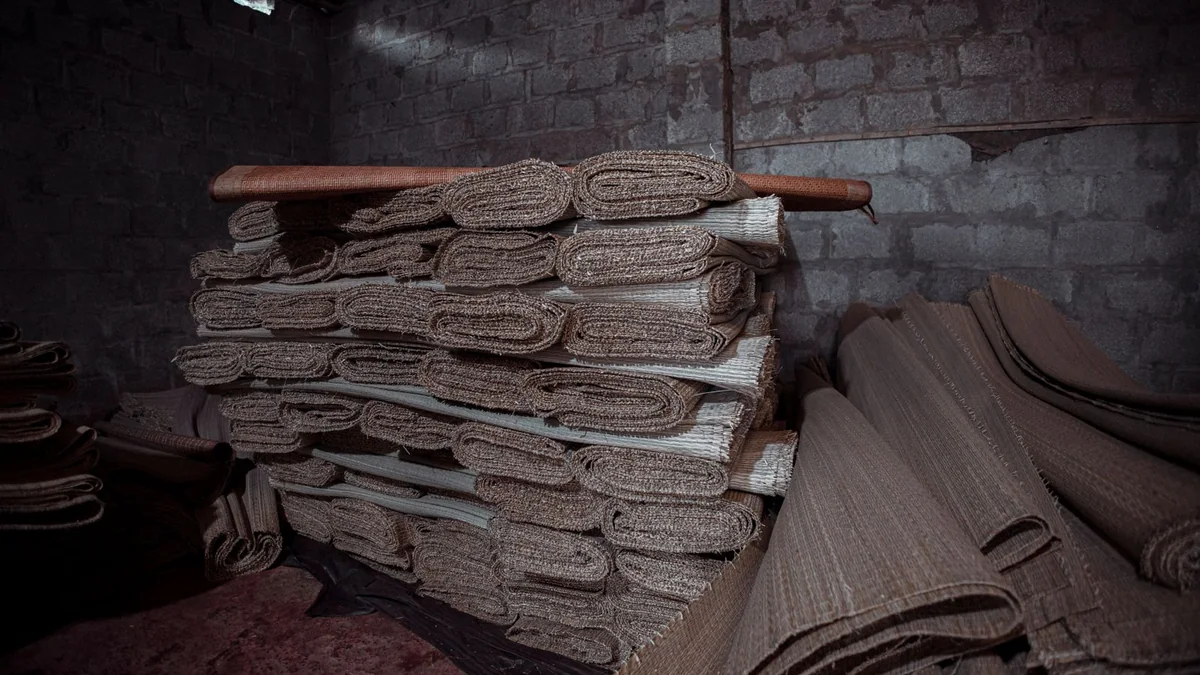
No mill is going to send half a roll to the dyehouse on its own. The dyehouse has a minimum vat too, and a small batch isn’t worth firing one up. So the 3,000 you’re quoted may have nothing to do with whether the factory wants your business. It’s the vat size talking.
Plastic is blunter. Pellets are bought by the tonne, colour has to be matched separately, and a colour match carries its own minimum. Change the colour and you’ve added a match, a cost, and a threshold. Every injection moulder knows this. Nobody puts it in the quote.
Setup costs get spread across the units
Printing is the one buyers skip over. Every extra colour is another set of plates. Every size change is another setup. Both are fixed costs — spend them or lose them. The factory has two ways to recover: bill you for the plates up front, or bury them in the unit price and let volume dilute them.
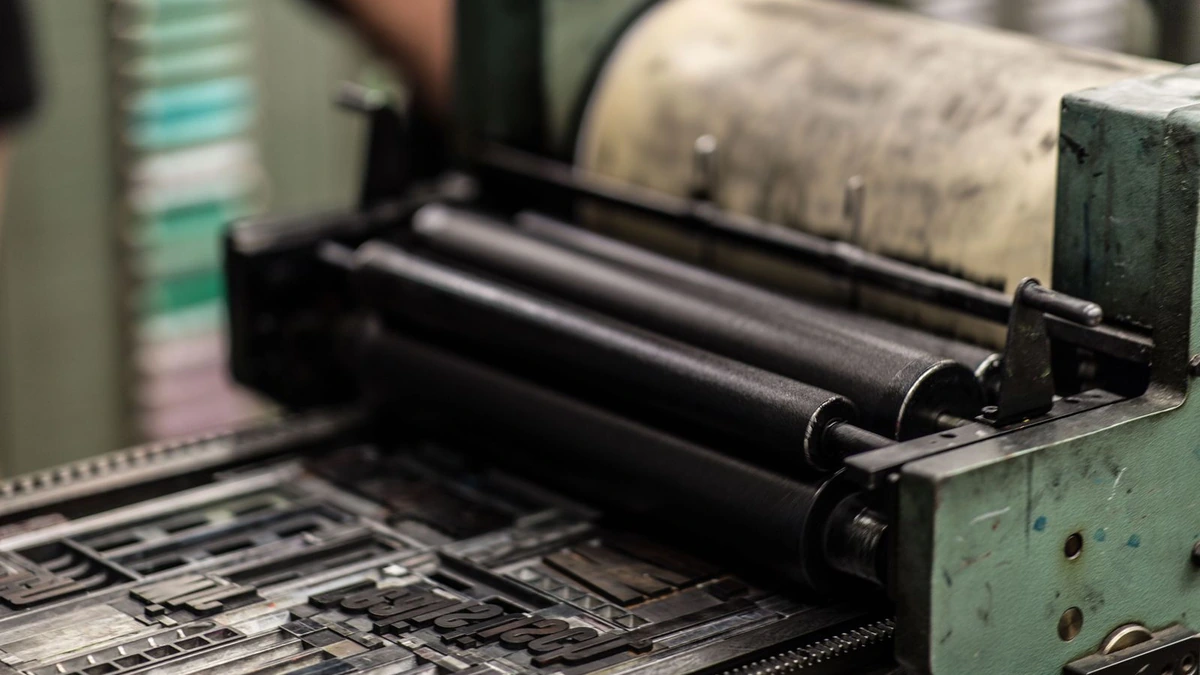
Most factories pick the second. Asking for cash is awkward. Spreading it is comfortable for everyone.
That’s why some MOQs in China look unreasonable. It isn’t that the factory won’t run a small order. It’s that the plate cost has to land somewhere.
Tooling is a different animal. A hardware factory in Dongguan will quote anything from a few thousand to several hundred thousand RMB for a mould, depending on cavitation, tolerance and the grade of steel. Same choice: bill it separately, or amortise it.
When the number is large, the amortisation matters more than the price. A RMB 50,000 mould spread over 3,000 pieces adds about RMB 17 per piece. Spread over 10,000, it adds five. Same mould, an eleven-RMB difference in the quote. Half of what you’re negotiating may just be how they chose to spread the tooling.
A line has a break-even volume
An assembly line has a dozen stations running at different cycle times. At low volume, the front of the line finishes and waits for the back, and you’re paying wages while both sit there. A small-appliance factory in Foshan has run the numbers: below a certain daily output, the line doesn’t cover its own labour and power.
They know that number. It doesn’t appear on the quote. Ask and you’ll usually get something vague about small orders not being worth it. Push, and the good ones will tell you the actual figure — and those are the ones worth negotiating with.
Ceramics don’t even have that conversation. In Chaozhou, a kiln holds a fixed load. Fire it half full and you still burn a full kiln of gas. No amount of talking changes the volume of the kiln.

Small-batch losses hide in the unit price
The last one is the hardest to see. On a small run, setup, trial shots and first-article approval take up a larger share of the schedule, and the same defect rate weighs heavier per unit. Nobody says so, but the margin for it is built into the price.
Which means the points you negotiate away often aren’t coming out of the factory’s profit. They’re coming out of that buffer. The price drops. What arrives at your door is a separate question — and it’s the one the AQL you agreed to will settle.
Of the four, only the material constraint is hard. The other three are money, and money can be negotiated. So before you counter-offer, ask how the number was built. A clear answer tells you which lever to pull. A vague one tells you something about the order itself.
Six ways to move it, and which one fits
Work out which cost you’re up against first. Between them, the four above cover most of what drives an MOQ in China. Use the wrong lever and you can talk all day — offering to pay for plates when the constraint is a dye vat just tells them you don’t know the process.
| What’s driving it | What to offer | How to say it | Why they agree |
|---|---|---|---|
| Material minimum (hard) | Switch to a stock spec | Can we move this to one of your standard colours? | No new vat, no new colour match, no added cost |
| Plates, setup | Pay the plate cost separately | I’ll cover the plates; price the units at the 3,000 rate | A fixed cost becomes cash, with no risk to them |
| Tooling | Pay for the mould, own it | I’ll pay for the tooling, and it’s registered in my name | Nothing left to amortise, and they keep the follow-on orders |
| Line time | Split the order, or combine SKUs | 1,000 this month, 2,000 next, on one PO | Both runs go into the schedule, total volume unchanged |
| Yield loss | Accept a higher first-run price | 4.40 on the first batch, back to 4.00 on the second | The first run covers the loss, later runs earn normal margin |
| Stock pressure | Ask about stock material | Anything in stock close to this spec? | It clears inventory — an easy yes |
Combining SKUs is worth a paragraph of its own. Say you’re buying three SKUs at 800 pieces each from a packaging factory in Yiwu. Individually, none of them clears the 1,000-piece line. But if all three use the same board, the same print, and differ only in size, the changeover is trivial — quote it as 2,400 pieces total and it usually goes through.
Three different boards and three different processes is a different story. The factory still changes over three times, the cost is the same as running them separately, and there’s no reason to give you anything.
The arithmetic nobody runs
Most buyers settle an MOQ in China on feel. It’s arithmetic.
The figures below are ones I picked for the example — substitute your own. Unit price USD 4.00, MOQ 3,000, and you need 500.
Take the 3,000 and you’re buying 2,500 extra units: USD 10,000 sitting in a warehouse. Negotiate down to 500 at a 10% premium and you pay USD 4.40, or USD 200 more.
Those 2,500 don’t sit there for free. Inventory carries cost — capital tied up, storage, insurance, and the risk of not selling. The range usually quoted in supply-chain work is 20–30% of inventory value per year, and that is an estimate rather than a precise figure. Take the middle, 25%: USD 10,000 held for a year costs USD 2,500.
2,500 against 200. If the stock won’t clear within a year, moving the MOQ wins by an order of magnitude.
Change the assumptions and the answer flips. A core product that moves 2,500 units in three months drops the carrying cost to roughly USD 600, and taking the 3,000 starts to look better. The premium matters too: at 20% instead of 10% you’re paying USD 400 and the conclusion holds; at 40%, USD 800, and you’re back to comparing against carrying cost. Shelf life matters most of all — seasonal goods, versioned products, anything with an expiry date. A year in storage costs more than interest.
| Option | Cash out now | Total cost after a year | Fits when |
|---|---|---|---|
| Take 3,000 at 4.00 | 12,000 | 14,500 (incl. 2,500 carrying) | Core product, fast turnover, no shelf-life risk |
| 500 at 4.40 | 2,200 | 2,200 | Trial order, new customer, seasonal goods |
| 1,000 at 4.24 | 4,240 | 4,740 (incl. ~530 carrying) | The compromise most buyers land on |
Run it again with your own cost of capital instead of 25%. Your number beats any industry average.
Is “that’s our minimum” true?
“That’s our minimum.” Don’t switch factories yet, and don’t accept it either. Whether it’s true doesn’t show up in the email. It shows up in what you ask next.
When an MOQ in China is real, the factory can usually name the constraint. Ask why 3,000, and you get “the dyehouse minimum is 500 kg, a garment uses 200 grams, work it out.” That kind of answer comes with arithmetic attached, and arithmetic is hard to invent. Push further and they’ll offer an alternative: 3,000 is impossible, but this stock fabric gets you to 300, in three colours. That’s someone solving your problem, not blocking it. Say you want to test samples first, and they don’t push back — they’re pricing the next order, not this one.
When it’s a starting position, the tells are different. The most obvious is an answer that stays abstract. “That’s industry standard.” “This is the volume everyone orders.” Ask again, and you get the same two sentences.
An easier one to spot: the number moves too fast. You say 500, they come back with “800 then” — before asking a single question about your cost structure. A real 3,000 doesn’t become 800 in one email.
Then there’s “let me apply for you.” In Chinese business correspondence that phrase usually means there is room, and they need a reason to use it. When you hear it, you know you can keep going.
Sometimes you can’t tell. In that case, watch whether they’ll spend anything on you — sample cost, tooling time, an engineer’s afternoon. A factory that won’t invest a little to test you is probably not negotiating in good faith.
One more signal worth filing away: if the number happens to equal a full container load, it was probably built backwards from freight rather than forwards from cost. A 20ft container holds about 33 cubic metres; a 40ft high cube holds about 76. At 0.02 cubic metres per packed unit, that’s roughly 3,800 units in a 40HQ. A quoted 3,000 often just means “one container, not half empty” — the volumes are set by ISO 668, not by the factory’s cost sheet.
Once you know which of the two you’re facing, the response splits. The first calls for changing spec, material or factory. The second calls for staying in the conversation, where there is usually more room than you assumed.
When not to negotiate the MOQ
Three situations where pushing on an MOQ in China is the wrong move, and the conversation only hardens.
The product isn’t validated yet. Especially anything that needs tooling. What you want at that stage is samples and a small trial run, not a factory squeezed on mould cost and line time. Whatever you win on the MOQ tends to come back as first-batch quality. If you haven’t stood on the factory floor yet, a factory audit is the cheaper mistake to make first.
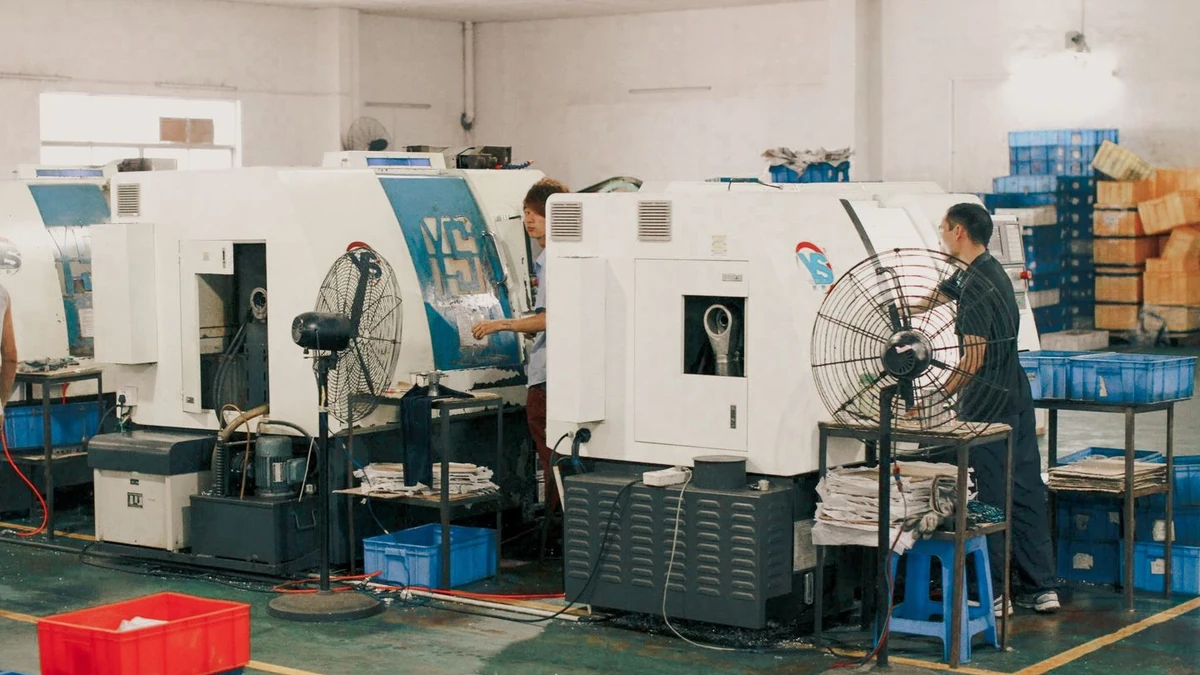
Your volume isn’t stable. Factories will bend for a steady 500. They won’t bend for a 500 that may never repeat. If the purchasing plan is guesswork, fixing that is worth more than any negotiation.
The unit price is already at the floor. MOQ and unit price are two sides of one sheet of paper. Push one through and the other has nowhere to go. Ask for the lowest price and the lowest minimum at the same time, and the usual response is silence — not refusal, just a set of numbers that won’t resolve.
There’s a fourth case that isn’t quite “don’t negotiate,” but gets confused often: the MOQ belongs to the factory, not the trading company. A trader’s number usually includes their own stocking quantity, so there’s more room — but you need to know who you’re actually talking to. Negotiate with the wrong party and nothing you agree means anything.
Three things to do this month
One. Ask how the number was built, in writing. Not “can you do less” — ask whether the volume is set by material, tooling or line time. How they answer is the answer.
Two. Run the carrying-cost calculation with your own cost of capital, not the 25% above. Once you have it, you’ll know which orders are worth pushing and which are better accepted. Those two feel completely different in the room.
Three. List what your SKUs share. Same fabric, same print, same packaging means a mixed batch is worth raising. Nothing shared means don’t spend the afternoon on it.
FAQ
Is MOQ negotiable in China?
Usually, but only on part of it. The material minimum is physical — a dye vat, a kiln load, a roll of fabric. The other three are money, and money moves. The question isn’t whether they’ll lower it, but which of the four costs you’re actually paying for.
Can I pay a fee to lower the MOQ?
Yes, and it works on fixed costs. Plates, tooling, sampling — pay them separately and the factory has nothing left to amortise. It won’t work on material minimums or line break-even, because those aren’t financial problems.
Why is the MOQ higher than the sample order I already placed?
Because they’re different processes. Samples run on a sample line or by hand — expensive per unit, but they don’t occupy production. Mass production opens a line, and an open line has a minimum output. Asking for production volume at sample quantity is asking the factory to lose money.
Does a mixed batch count as one MOQ?
Depends how much the SKUs share. Same material, same process, different size or colour — usually yes. Different material and process — the factory changes over anyway, so it’s the same as separate runs. Don’t ask “can we mix”; ask “how many changeovers does this need.” The answer is in that question.
If I win on MOQ, will they take it back somewhere else?
Probably. The usual places are unit price, lead time, and inspection standard. Once the MOQ is settled, confirm all three again and put them in the PI — along with the payment terms, which is where the next round of arguments usually starts. It isn’t suspicion. It’s writing it down before it becomes a dispute.
Does a small order always mean a higher unit price?
Usually, but the size of the premium is negotiable. In our experience 5–15% is the common band. Above 20%, it’s typically a factory pricing you out rather than quoting you.
Back to that line in the email
An MOQ in China might be the dye vat, the plates, the kiln, or just a number someone threw out to see how you’d react. Four situations, four responses, and using the wrong one wastes the conversation.
You don’t need to win every negotiation. You need to know which cost you’re paying for, and whether it’s worth paying.
Tell us what you actually need and the unit price you’re targeting, and we’ll take that number to a shortlist of vetted factories, ask each to quote on the same basis — how material is costed, who pays for tooling, whether the order can be split — and put the differences side by side. Whether it moves depends on their cost structure. Whether anyone bothers to break the number down depends on who’s asking. That’s what our sourcing service is for, and it starts before the PO, not after.
More on sourcing strategy
- Payment terms with Chinese suppliers — deposit timing, account types and the red flags before you wire
- How to source products from China — the full ten-step process, from requirements to inspection
- China sourcing trends for 2026 — five trends reshaping cost, compliance and lead times
Also worth reading: Factory audit: the five checks — the five checks we run on every factory visit.