


Before we talk shipping: why the cheapest quote often costs the most
Shipping from China is the final hurdle between your order and your customer. You have found the factory, negotiated the price, audited the workshop, and passed inspection. The goods are boxed, labeled, and sitting in a warehouse in Dongguan. Now what?
Most buyers treat shipping as an afterthought. They ask the factory for one quote, pick the cheapest number, and hope for the best. That is the most expensive habit in importing. The cheapest shipping quote is often the one that costs you the most — through delays, hidden fees, damaged cargo, or a missed selling season. We have seen buyers save $300 on ocean freight only to lose $3,000 because their container missed the Christmas window by three weeks.
We have arranged shipping from China for hundreds of orders — from a single carton of samples to a full 40-foot container of furniture. We have seen shipments sail on time, shipments rolled for four weeks, and cargo that sat unclaimed in a warehouse for two months because nobody tracked it. This guide is everything we have learned about getting your goods from a Chinese factory to your door without the surprises.
The three ways to ship from China (and when to use each)
Choosing the wrong method is the single most common mistake when shipping from China. There are three options, and each has its place:
Sea freight — the workhorse of global trade. Your goods go into a container, or share one (LCL, less than container load), sail from a Pearl River Delta port — Yantian, Shekou, or Nansha — and arrive at your destination port. It is cheap for volume but slow, and it only makes sense once you have real space to fill.
Air freight — your goods fly on a cargo plane, or in the belly of a passenger jet, from Guangzhou, Shenzhen, or Hong Kong to your nearest airport. Fast, usually three to seven days door to door, but expensive per kilogram.
Express courier — DHL, FedEx, or UPS pick up from the factory and deliver to your door in one to five days. The simplest option, but priciest per kilogram, and built for small parcels.
Here is the rule of thumb forwarders actually use, by size and urgency:
- Express courier: best for samples and small parcels, roughly under 20kg, or emergency parts. It starts at 0.5kg. To estimate yourself, volume weight = length × width × height (cm) ÷ 5,000, and the carrier charges the greater of actual weight or volume weight. Example: a 50×40×30cm carton weighing 8kg has a volume weight of 12kg, so it bills as 12kg, not 8.
- Air freight: starts at a 45kg chargeable minimum — below 45kg you are billed as if it were 45kg, rarely worth it against courier; the sweet spot is about 100kg to 1,000kg. Volume weight = length × width × height (cm) ÷ 6,000, again billed at the higher of actual or volume weight.
- Sea freight (LCL): starts at 1 CBM (one cubic meter). Once you are around 1.5 to 2 CBM and not in a hurry, LCL usually beats air on cost; at roughly 14 to 15 CBM, a full container (FCL) starts to make more sense than sharing.
These are guides, not hard rules — a heavy, dense product and a light, bulky carton are priced differently — but this framework gets most buyers to the right answer nine times out of ten.
Sea freight: Costs, Transit Time, and What the Quote Actually Includes
A sea freight quote when shipping from China usually covers only the ocean leg — the cost of putting your container on a ship and sailing it from Port A to Port B. It does not include the trucking from factory to port, Chinese port fees, export customs clearance, import clearance in your country, duties, or the truck from your destination port to your warehouse. Those are local charges, and they can add thirty to fifty percent onto the ocean number.
The pricing terms — FOB, CIF, and DDP — define exactly who pays for each stage. We break those down in detail in our guide to sea freight from China and the hidden fees, so we will not repeat them here. For most clients we recommend FOB with a trusted forwarder: it gives you the best balance of cost, control, and visibility, and our regular volume usually lets us beat the forwarder the factory tries to hand you.
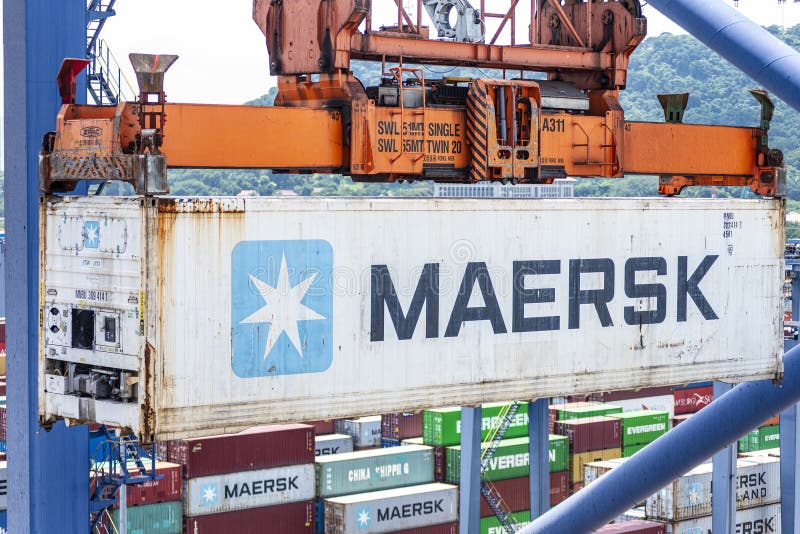
Transit times from the Pearl River Delta (Yantian / Shekou / Nansha) are roughly:
- US West Coast (Los Angeles / Long Beach): 14 to 20 days
- US East Coast (New York / Savannah): 25 to 35 days
- Northern Europe (Rotterdam / Hamburg): 25 to 35 days
- UK (Felixstowe / Southampton): 28 to 38 days
- Australia (Sydney / Melbourne): 12 to 18 days
These are port-to-port times. Add another three to seven days for trucking, customs clearance, and final delivery. In peak season — August through November, when retailers stock up for Christmas — delays when shipping from China stretch these numbers by fifty to one hundred percent. We have seen a run to Los Angeles that normally takes eighteen days take forty-two in October, because every ship on the route was full and the ports were jammed.
Air Freight: When It Is Worth the Premium
Air freight is the fastest method of shipping from China, and it is the right call in three situations: your order is urgent, your goods are high value, or your shipment is too small for sea freight to make sense.
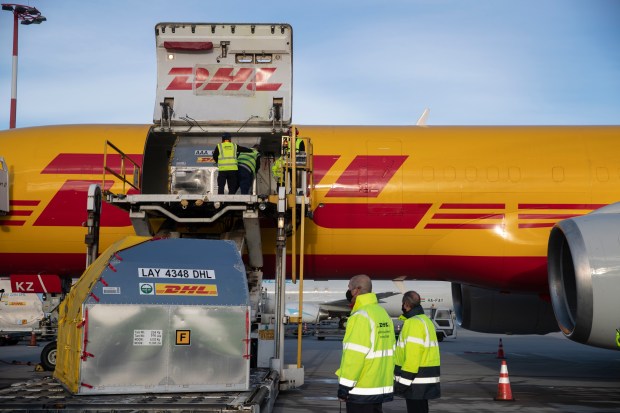
Air rates when shipping from China swing with the season, the route, and available capacity. As a rough guide, budget $4 to $8 per kilogram for economy air from Guangzhou to the US or Europe, and $6 to $12 per kilogram for express air. For a 200kg box, that is $800 to $2,400 — compared with $300 to $600 for sea LCL. Air is three to five times pricier, but four to six times faster.
The math is straightforward. If your goods cost $50 a unit and you ship 200 units, the cargo is worth $10,000. Sea takes 30 days, air takes 5. You pay an extra $1,000 to get the goods 25 days earlier. If those 25 days let you hit a deadline, capture a sale, or avoid a stockout, that premium pays for itself many times over. If those 25 days do not matter, sea is the obvious choice.
Take one client we worked with. They sold outdoor equipment and needed 500 camping lanterns for a US Memorial Day sale. The factory finished production only 10 days before the holiday — sea freight would have taken 25 days, far too late. Air freight cost an extra $1,800, but the promotion generated $45,000 in revenue. The client called it the best $1,800 he ever spent. That is exactly when air freight earns its keep.
These are rough market reference rates, not a quote. Your final number depends on the forwarder, route, and season, so always confirm a live quote before pricing your margin.
The hidden costs nobody quotes you
The hidden costs of shipping from China can add thirty to fifty percent to your initial quote, and they are why so many buyers get a final bill that shocks them. Here are the ones we see most often:
Demurrage and detention. Once your container reaches the destination port, you usually get three to seven free days to pick it up. After that, the shipping line charges by the day — often $50 to $200 per container. If customs is slow or your trucker is unavailable, these fees pile up fast. We have seen a client hit a $2,000 demurrage bill simply because their customs broker went on vacation and nobody was assigned to clear the container.
Customs duties and taxes. These are not really hidden, but plenty of buyers forget to budget for them. Duty is calculated as a percentage of the declared value and is often the single largest cost after the goods themselves. The rate depends on your product’s 10-digit HTS code and your destination country, so there is no single number.
For shipments to the US, most categories now also carry an extra Section 301 tariff on top of the normal duty. In the EU, you also pay import VAT on the goods plus shipping. Always confirm the rate against your product’s HTS code before you price your margins — a steep duty can turn a profitable product into a loser.
Insurance. Most sea quotes include basic cover, but it often protects only a slice of the goods’ value. For high-value shipments we always recommend extra cargo insurance — usually 0.3 to 0.5 percent of the goods’ value, and worth every penny if something goes wrong.
Repacking and labeling. If your goods need a country-of-origin mark, barcode, or compliance label and the factory did not apply it, you pay to have it done at the destination — often $1 to $3 per unit. It is always cheaper to have the factory do it in China before loading.
Storage fees. If your goods arrive at the destination warehouse and you are not ready to take delivery, you pay storage — roughly $5 to $15 per pallet per day. Plan your delivery date with care.
Why shipments get delayed (and how to avoid it)
The most common cause of delays in shipping from China is not the factory, not the shipping line, and not customs. It is poor planning. Here are the five delays we see most often, and how to prevent them.
Delay 1: not booking space early enough in peak season. From August through November, every container ship to the US and Europe is full. Wait until your goods are finished to book, and you may not get space — or you will pay two to three times the normal rate.
We had a client in October who ordered 2,000 wireless chargers and planned to ship as soon as production ended. The factory finished on October 15, but the earliest available sailing was November 8 — three weeks later. Their Amazon listing went out of stock, and we estimate they lost about $12,000 in sales. The fix: book your container two to three weeks before the goods are ready, especially in peak season. A good forwarder will hold the booking if the factory slips by a few days.
Delay 2: missing or incorrect paperwork. Customs clearance needs a commercial invoice, a packing list, and a bill of lading. If any is wrong — a mismatched quantity, a missing HS code, a vague product name — customs holds the shipment until it is corrected.
We have seen containers held for 10 days because an invoice read “electronic accessories” instead of the specific product name. The fix: review every shipping document before the goods leave the factory. We go through every document for our clients before shipment — it takes fifteen minutes and can save weeks.
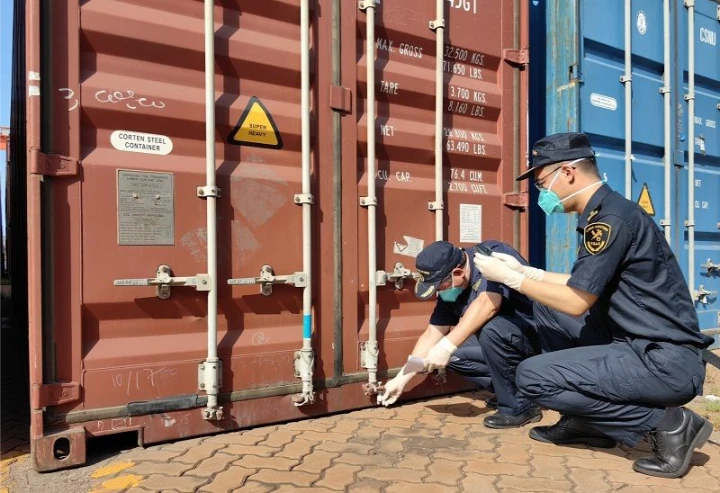
Delay 3: customs inspection. Sometimes customs opens your container, checks the goods against the paperwork, and verifies the declaration. An inspection usually adds three to seven days, longer if they find a discrepancy. You cannot prevent a random inspection — but accurate, complete paperwork lowers the odds. If you ship a brand-new product category for the first time, expect a higher chance of being picked.
Delay 4: port congestion. Major ports — Los Angeles, Long Beach, New York, Rotterdam, Hamburg — periodically clog up, especially in peak season or after a labor dispute. Ships anchor offshore and wait for a berth, sometimes one to two weeks. You cannot fix congestion itself, but you can plan around it. We monitor port congestion for our clients and adjust schedules when needed — sometimes routing through a quieter port, sometimes switching an urgent order to air.
Delay 5: the factory is not actually ready. This is the most frustrating delay of all. The factory promises “goods ready Friday,” you book a container for Monday, and Friday arrives with “we need another week.” The booking is wasted — you may lose the deposit — and you rebook, often at a higher rate. The fix: never trust a ready date without proof. We always run a pre-shipment inspection before confirming a container booking. If the goods are not finished and packed, we do not book the ship.
How we handle shipping for our clients
Here is how we make shipping from China painless for our clients. We do not run ships or trucks ourselves — instead, we act as your buffer between the factory, the forwarder, and customs. When you work with us, shipping is planned from day one, not left to the last minute.
We start by asking the right questions: What is the product? How much does it weigh, and how much space does it take? Where is it going, and when do you need it? What is the budget? From those answers we recommend the right method — sea, air, or express — and the right pricing term, then we get itemized quotes from trusted forwarders and help you compare them, including DDP door-to-door if you want no surprises.
When the goods are ready, we inspect them first. If they pass, we book the container or air freight through a forwarder we have worked with before. We check every document — commercial invoice, packing list, bill of lading — before it goes out.
Then we track the shipment from factory to destination: pickup loaded, container on board, ship departed, ship arrived, customs cleared, out for delivery. If something slips — a rolled container, an inspection, congestion — we tell you immediately and what we are doing about it. No surprises.
If something goes wrong — damaged cargo, a lost shipment, a billing dispute with the forwarder — we handle it. We have relationships with forwarders, shipping lines, customs brokers, and insurers, and we know how to push things through quickly. You should not be making international phone calls at 2 a.m. or arguing with a forwarder in broken English. We do that for you.
More on shipping and customs
- Sea freight from China — FOB, CIF and DDP compared, plus the hidden charges
- Air freight from China — chargeable weight, routes and door-to-door time
- LCL vs FCL — where LCL stops being cheaper than a full container
Also worth reading: How to source products from China — the full ten-step process, from requirements to inspection.
Our recommendation
Shipping from China does not have to be a gamble. It is a process, and like any process it goes smoothly when you plan ahead, use the right partners, and sweat the details. Our advice, distilled from hundreds of shipments:
- Plan your shipping before you place the order. Know the product’s weight and volume, the destination, and the deadline.
- Use sea freight for large, non-urgent orders; air freight for urgent or high-value goods; express for samples and small parcels.
- Choose FOB with a trusted forwarder for the best balance of cost and control.
- Budget for the hidden costs — duties, taxes, insurance, demurrage. Add thirty to fifty percent to the ocean number to reach your real landed cost.
- Book peak-season space early, August to November. Do not wait until the goods are ready.
- Review every shipping document before the factory releases the goods.
- Run a pre-shipment inspection before you confirm a container booking. Never trust a ready date without proof.
- Track your shipment actively. Do not wait for the forwarder to tell you there is a problem — ask, and ask early.
Follow these, and your goods arrive on time, on budget, and in good condition. Skip them, and you learn the same lessons the hard way — and the tuition is expensive.
If you have an order ready to ship, or you are still planning and want to know what shipping from China will actually cost and how long it will take, send us your product details and destination. We will come back with a clear quote, a realistic timeline, and a plan that avoids the delays and hidden fees that catch most buyers off guard.