

If you want to learn how to source products from China, you are in the right place. The process sounds simple — find a factory, place an order, receive the goods.
But anyone who has actually done it knows there are countless pitfalls along the way: the “factory” you found is actually a trading company, the mass production looks nothing like the sample, the factory goes silent after receiving your deposit, quality issues only surface after the container arrives, or customs holds your shipment and fines you.
This guide breaks the complete sourcing process into 10 clear steps — what to do, what to ask, and what to watch out for at each stage. From defining your requirements to receiving the goods and building a long-term partnership, everything is covered in one place.
Whether this is your first time sourcing from China or you are an experienced buyer looking to streamline your process, this guide will help you avoid the most common mistakes.
Step 1: Define Your Requirements First — This Is Where Every Sourcing Project Starts
Many buyers start by asking “how much is this?” without even knowing exactly what they want. The factory can only guess, and the result is either an inflated quote that scares you away or a low quote that gets padded with extra charges later.
Before contacting any factory, prepare these five things:
Product specifications: dimensions, material, color, functions, and certification requirements (CE, UL, RoHS, FCC, etc.). The more specific, the better — ideally with drawings, photos, or reference samples. If you have customization needs (logo, packaging, custom colors), write those down too.
Order quantity: how many units for the first order? What is the approximate monthly or quarterly volume after that? Quantity directly affects both price and MOQ. Factories quote large buyers and small buyers very differently.
Target price: what is your budget? You do not need to tell the factory, but you should have a number in mind. A target price below production cost is always a red flag.
Delivery timeline: when do you need the goods? Is there a hard deadline before a peak season or holiday? Tight timelines narrow down your factory options and may push prices higher.
Target market: which country will the products be sold in? Different countries have different certification and product standard requirements — the US needs UL/FCC, Europe needs CE/RoHS, Australia needs SAA/RCM.
Put these five items into a simple document and send it when you contact factories. Your professionalism will stand out immediately, and factories will be less likely to quote inflated prices.
This preparation is what separates successful sourcing from China from costly mistakes.
Step 2: Five Channels to Find Chinese Factories — Pros, Cons, and When to Use Each
Once your requirements are clear, the next step is finding factories. Here are the five most common channels:
1. Alibaba: The most widely used platform, with the largest number of suppliers and product categories, plus strong filtering tools. However, many suppliers on Alibaba are trading companies posing as factories. How to tell: check the company name (names containing “trading,” “commerce,” or “import/export” are likely trading companies), check how many years they have been in business (be cautious with less than 3 years), and look for verified supplier and gold supplier badges. Best for: buyers who are still exploring categories and want to compare many options.
2. Trade shows: Canton Fair, Hong Kong Electronics Fair, and various industry-specific shows in Shanghai and Shenzhen. Established and high-quality factories always attend major trade shows — especially Canton Fair. A factory that can secure a booth at Canton Fair has at least a certain scale and export experience. At shows you can meet factory people face to face, see physical samples, and negotiate prices on the spot — the most efficient way to source. But shows only happen a few times a year and require travel time and expense. Best for: buyers with a clear product category who want to efficiently shortlist suppliers.
3. Google search: Search for “product name + manufacturer + China” or “product name + factory + China” to find factories with their own websites. These factories usually have more export experience and are relatively reliable. But Google results are mixed in quality and require your own screening. Best for: experienced buyers who know exactly what they are looking for.
4. Industry referrals: Recommendations from peers, friends, or existing suppliers. This is the most reliable channel because someone has already vetted the factory for you. But if your network is small, the options will be limited. Best for: buyers with industry connections.
5. Sourcing agents / buying offices: You tell them your requirements, and they handle factory screening, factory audits, order follow-up, and quality inspection. Best for buyers who do not have time to travel to China themselves, or who are unfamiliar with the product and need professional judgment. Agents charge a service fee, but they help you avoid many costly mistakes — in the long run, they may actually save you money.
Each channel has its pros and cons. We recommend using multiple channels in parallel rather than relying on just one. Find 10–20 candidates, then narrow them down gradually.
Step 3: Screen Factories — How to Tell Real Factories, Trading Companies, and Shell Companies Apart
Once you have a list of candidates, the next step is screening. The most critical thing: distinguish between real factories, trading companies, and shell companies.
Trading companies are not impossible to work with, but they add a 10–30% markup and are more likely to pass the buck when problems arise. If you plan to source long-term, it is better to work directly with factories. Shell companies are even more dangerous — they take your deposit and disappear.
Here is how to identify a real factory:
- Ask for the business license: Look for words like “production,” “manufacturing,” or “processing” in the business scope. If it only says “sales” or “trading,” it is a trading company.
- Ask for a factory video: Look for production lines, warehouses, workers, and the factory entrance sign. A real factory’s video will show products being manufactured and workers on the line. A trading company’s video usually only shows an office and a sample room.
- Ask technical questions: For example, “Do you make the core components in-house or outsource them?” “What is your monthly capacity? How many units does one line produce per day?” “What is your defect rate and how do you control it?” Real factories answer quickly and specifically; trading companies hesitate or give generic answers.
- Check customs data: If you have access, look up the company’s export records to see if they actually export and how much.
- Conduct an on-site or third-party factory audit: The most reliable method. If possible, visit yourself or have a local partner visit for you. We wrote a detailed factory audit guide covering the five things we check on every visit — the showroom, production floor, warehouse, paperwork and QC room, and the questions that catch inconsistencies. You can find it here: Factory Audit in China: 5 Things We Check on Every Visit.
After screening, keep 3–5 candidates. More than that will spread your attention too thin.
Step 4: Contact Factories and Request Quotes — What to Ask, How to Ask, and How to Read a Quote
When contacting factories, do not just ask “how much?” Send the requirements document you prepared in Step 1, and ask these key questions:
- What is the MOQ? What are the tiered prices for different quantities?
- What is the lead time? How many days from deposit receipt to shipment?
- What payment terms do you accept? (Common: 30% deposit + 70% before shipment)
- Can you provide samples? How much is the sample fee? Is it refundable after a bulk order?
- Have you supplied customers in our target market? Do you have the relevant certifications?
- What is the standard packaging? Can you customize packaging? How much is the customization fee?
- What is your after-sales policy? How do you handle quality issues?
When reading a quote, pay attention to these points:
- Trade terms: Is the price EXW, FOB, or CIF? EXW means ex-works — you arrange transport. FOB means free on board — the factory delivers to the port. CIF means cost, insurance, and freight — includes shipping and insurance. The price difference between these terms can be significant, so always ask which one applies.
- Price validity: Will the price change if raw material costs go up? How long is the quote valid?
- Hidden fees: Are mold fees, printing fees, packaging fees, and certification fees included or charged separately?
- Currency: Is the quote in USD or RMB?
After receiving 3–5 quotes, do not simply pick the cheapest one. The cheapest quote often leads to the most problems down the line — either material shortcuts, delayed delivery, or no after-sales support. Choose the factory with a mid-range price, professional answers, fast response, and willingness to cooperate on samples.
Step 5: Sample Approval — Never Skip This Step. Skipping It Costs More Later
Many new buyers skip samples to save a few dozen dollars, only to receive bulk goods that look nothing like what they expected — losing thousands of dollars in the process.
You must get samples, for three reasons:
- Check quality: Verify the workmanship, functionality, and materials meet your requirements.
- Test cooperation: A factory that refuses to make samples or drags its feet on samples will be even worse to deal with during bulk production.
- Set the standard: The approved sample becomes the benchmark for bulk production inspection. Keep it carefully and compare it against the bulk goods when they arrive.
What to check when evaluating samples:
- Appearance: scratches, color differences, burrs, stains
- Function: test every function, run it continuously for a while to check stability
- Dimensions: measure with a ruler, do not just trust the factory’s data
- Material: if you have material requirements, find ways to verify (magnet test for stainless steel, weigh to check thickness, burn test for plastic type)
- Packaging: check if packaging is sturdy enough to survive shipping
- Manual and labels: language, content, and certification marks are correct
Sample fees are typically $10–$100, and most factories refund them after you place a bulk order. Do not save money on samples — this is the highest-return investment in the entire sourcing process.
Samples are the most important quality check before you commit to sourcing products from China at scale.
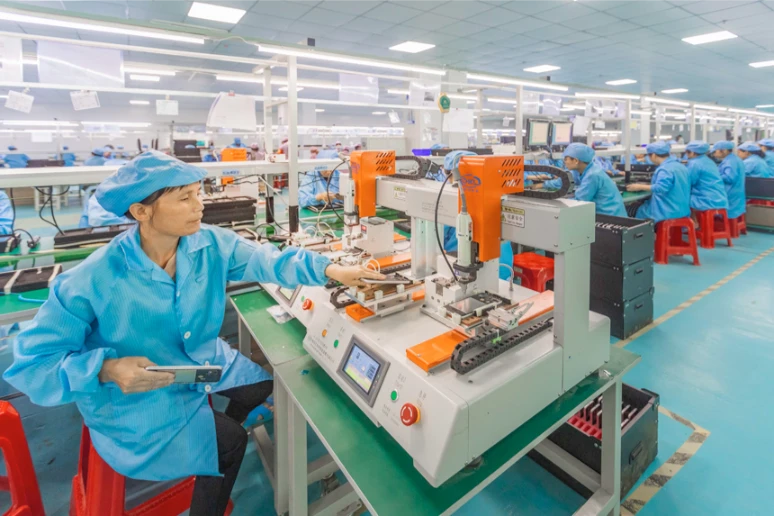
Step 6: Factory Audit — See It With Your Own Eyes, Do Not Just Take the Factory’s Word
After samples are approved and before placing a bulk order, we recommend a factory audit — especially for first orders or large-value orders. This step should not be skipped.
Two methods:
- On-site audit: Visit China yourself, or have a local partner like us visit for you. See the production lines, warehouse, QC process, and talk to the person in charge. The most direct and reliable method.
- Third-party audit: Hire SGS, Bureau Veritas, Intertek, or another third-party agency to conduct the audit and issue an official report. Suitable for large orders or cases where factory qualification is critical.
Key things to check during an audit:
- Are they actually manufacturing your product, or outsourcing it to another factory?
- Are production line workers skilled? Is management organized?
- Is there a QC process? Is it sampling or 100% inspection? What are the QC standards?
- Are raw materials and finished goods stored separately in the warehouse? Is there moisture and dust protection?
- What is the monthly capacity? What percentage of capacity does your order take? Will your order be pushed aside during peak season?
We wrote a detailed factory audit guide covering the five things we check on every visit. Rather than repeating all the details here, you can read the full guide: Factory Audit in China: 5 Things We Check on Every Visit.
Step 7: Negotiation — It Is Not Just About Price. These Terms Matter More
Negotiation is not just about haggling over price. Many new buyers focus all their energy on price and neglect other terms, only to suffer bigger losses later.
Focus on these key terms:
Price: Do not start by asking for a 50% discount. Research the market price first, then negotiate reasonably. For larger quantities, you can ask for tiered pricing — for example, one price for 1,000 units, another for 3,000, and another for 5,000.
MOQ: If the factory’s MOQ is too high, negotiate a smaller first order with the promise of larger follow-up orders. Or combine different models or colors to reach the MOQ. We wrote a detailed MOQ negotiation guide with many practical techniques: How to Negotiate MOQ with Chinese Factories.
Lead time: Specify exactly how many days for delivery, and when the countdown starts (after deposit receipt or after sample approval). Is there compensation for delayed delivery? Always build in buffer time during peak season.
Payment terms: The common standard is 30% deposit + 70% before shipment. Never pay 100% upfront — the risk is too high. Do not ask for payment on arrival either; factories will not accept it. Letters of credit are suitable for large orders, but factories generally do not accept them for small orders.
Quality standards and inspection: Write clear quality standards, inspection methods, and acceptable defect rates into the contract. If there is a dispute, what is the reference (the approved sample? Third-party testing?).
After-sales terms: How are quality issues handled after delivery? Replacement? Refund? Discount on the next order? What is the response time?
Intellectual property: If you have custom designs or logos, specify that the factory cannot sell your designs to others or produce identical products for other customers.
During negotiation, do not fixate only on price. If you push the price too low, the factory will cut corners on materials and workmanship — and you end up losing more. A reasonable profit margin is what ensures the factory puts real effort into your order.

Step 8: Production and Quality Inspection — Do Not Wait Until the Goods Arrive to Find Problems
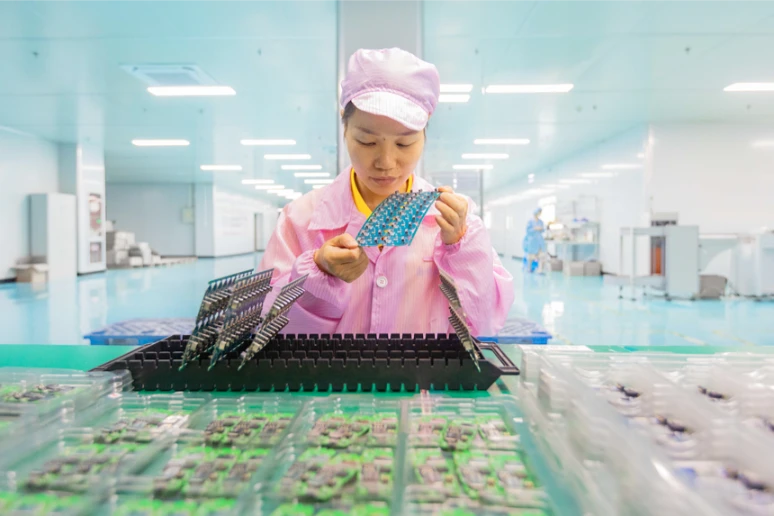
During bulk production, do not go completely silent. Stay in communication with the factory and ask for progress updates regularly. For large orders, we recommend a mid-production visit or a third-party during-production inspection.
After bulk production is complete and before shipment, always conduct a pre-shipment inspection.
Two inspection methods:
- Self-inspection: If you are in China or have a local partner, go to the factory and inspect the goods yourself.
- Third-party inspection: Hire SGS, Bureau Veritas, Intertek, or another agency to inspect based on AQL sampling standards and issue an official report.
Common inspection items:
- Appearance: scratches, color differences, damage
- Function: sample testing — test every function
- Quantity: count the units to avoid short shipments
- Packaging: is packaging sturdy? Are labels correct?
- Labeling: shipping marks, country of origin labels, certification marks
- Special tests: carton drop test, barcode scan, dimension measurement
We wrote a detailed pre-shipment inspection guide covering AQL sampling standards, a 5-step QC process, and defect classification (critical / major / minor). Rather than repeating everything here, you can read the full guide: Pre-shipment Inspection in China: Our 5-Step QC Checklist.
If inspection finds problems, have the factory rework or replace the units. Confirm everything is correct before shipment. Do not skip this to save trouble — if problems are discovered after the goods arrive overseas, the cost of returns and rework is 10 times higher than fixing it in China.
Step 9: Packaging and Shipping — Details Determine Whether Your Goods Arrive in Good Condition
After inspection passes, it is time for packaging and shipping. This step seems simple, but many problems occur here.
Packaging considerations:
- Use sturdy outer cartons. Fragile items need foam or bubble wrap protection; heavy items need reinforcement.
- Shipping marks must be clear: consignee, destination port, carton number, gross/net weight, dimensions, “Made in China.”
- Wooden packaging requires a fumigation certificate (IPPC mark), otherwise it may be held or even destroyed at the destination port.
- If moisture protection is needed, include desiccants; if rust protection is needed, use anti-rust bags.
- For custom packaging, confirm the artwork in advance to avoid printing errors.
Choosing a shipping method:
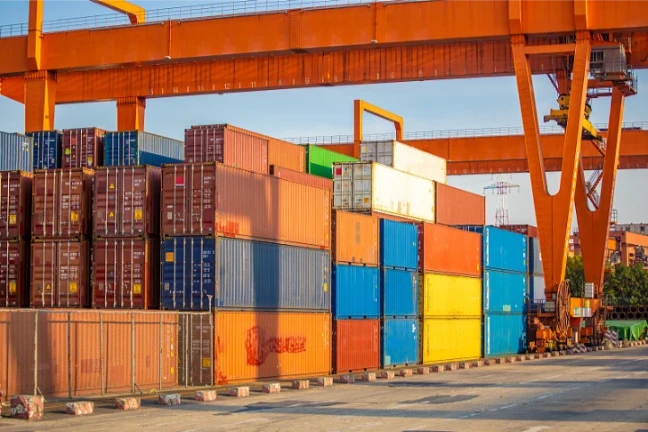
- Sea freight: Most common, cheap but slow (20–30 days to Australia, 30–40 days to the US, 30–40 days to Europe). Best for large shipments.
- Air freight: Fast but expensive (5–10 days). Best for urgent orders or small, high-value products.
- Express (DHL, FedEx, UPS): Fastest (3–7 days), most expensive. Best for samples and very small quantities.
- Rail freight: A newer option to Europe — faster than sea freight, cheaper than air freight (15–20 days), but only serves inland European destinations.
After shipment, track the logistics and prepare customs documents in advance: commercial invoice, packing list, bill of lading / airway bill, certificate of origin (if eligible for tariff preferences), and certification documents (if required by the destination port).
We wrote two detailed logistics guides — one explaining the differences between FOB, CIF, and DDP and all the hidden fees, and another covering shipping costs, transit times, and how to avoid delays. You can read them here: Sea Freight from China: FOB, CIF, DDP Explained and Shipping from China: Costs, Transit Time, and How to Avoid Delays.
Step 10: Receiving Goods, After-Sales, and Long-Term Partnership — Receiving the Goods Is Not the End
Receiving the goods is not the end — it is the beginning of the partnership.
After receiving the goods:
- Open and inspect immediately for any shipping damage.
- Sample test and compare against the approved sample.
- Count the quantity.
- If there are problems, take photos immediately as evidence and contact the factory to resolve them. Do not wait until you have sold half the stock to mention problems — the factory will not accept responsibility at that point.
Building a long-term partnership:
- Value good factories. Do not switch suppliers every time to save a few cents per unit. The cost of switching suppliers (re-sampling, re-auditing, re-establishing communication) far exceeds the small price difference.
- Pay on time. Only then will the factory treat you as an important customer and prioritize your orders during peak season.
- Share demand forecasts regularly so the factory can prepare materials in advance and avoid tight lead times.
- Communicate problems promptly instead of letting them build up. Most factories are willing to cooperate and solve problems — they just need you to speak up.
How to tell if a factory is worth a long-term partnership:
- Consistent quality — not good one batch and bad the next
- Reliable lead times — delivers when promised
- Proactive problem-solving when issues arise, not passing the buck
- Willing to accommodate your customization needs and improvement suggestions
- Reasonable pricing — not the cheapest, but good value for money
A stable supply chain matters far more than finding the lowest price.
Mastering how to source products from China is a long-term process, but following these steps will get you there faster.
FAQ: Common Questions About How to Source Products from China
Q: This is my first time sourcing from China and my order quantity is small. Factories ignore me. What should I do?
A: For small orders, look for factories that support low MOQ, or work with trading companies / sourcing agents. Sourcing agents can combine multiple small orders to get better prices and service. You can also try 1688 (the Chinese domestic version of Alibaba) for suppliers who support small quantities.
Q: What is the safest way to pay?
A: Never pay 100% upfront. Use 30% deposit + 70% before shipment (pay the balance after seeing the inspection report and shipping photos). Never send money via Western Union to an individual — the risk is extremely high. For large orders, a letter of credit is an option.
Q: What if I receive goods with quality problems?
A: Take photos immediately as evidence and contact the factory. If it is the factory’s fault, request replacement, a refund, or a discount on the next order. If the factory refuses to cooperate, you can file a complaint through the Alibaba platform (if you ordered through Alibaba) or seek third-party mediation. For serious cases, legal action is possible, but cross-border litigation is expensive — try to negotiate first.
Q: How do I prevent factories from cutting corners on materials?
A: Write clear material, workmanship, and inspection standards into the contract. Conduct pre-shipment inspection. Build a long-term relationship — factories will not risk losing a long-term customer for one order. Conduct periodic factory audits instead of disappearing after placing the order.
Q: Is the Pearl River Delta or Yangtze River Delta better for sourcing?
A: It depends on the product category. The Pearl River Delta (Shenzhen, Dongguan, Guangzhou) is strong in electronics, small appliances, hardware, and plastic products. The Yangtze River Delta (Ningbo, Yiwu, Suzhou) is strong in textiles, daily necessities, machinery, and large equipment. We wrote a detailed comparison guide: Pearl River Delta vs Yangtze River Delta: Where to Source in 2026.
Final Thoughts
Learning how to source products from China is neither as hard as it seems nor as simple as it sounds. Follow these 10 steps, and you will avoid most of the common pitfalls.
The core principles come down to three things: do not chase the cheapest price, do not skip steps, and do not be afraid to ask questions.
If you are considering sourcing products from China, or if you are already sourcing but running into problems, feel free to reach out to us. We are based in the Pearl River Delta and work with factories across dozens of product categories. We can help you with factory screening, audits, order follow-up, and quality inspection. Tell us what products you need, and we will help you from the very first step.
If you would like to discuss your sourcing project before reaching out to a factory, get a free consultation from our team and we will review your requirements with you.
More on sourcing strategy
- China sourcing trends for 2026 — five trends reshaping cost, compliance and lead times
- Greater Bay Area sourcing data — what Dongguan, Foshan and Zhongshan output data actually means
- Pearl River Delta vs Yangtze River Delta — which region fits your product category and budget
Also worth reading: Factory audit: the five checks — the five checks we run on every factory visit.