


Consejos de compra
Payment Terms with Chinese Suppliers: Deposit, Balance, and the Missing Clause
A payment clause on a proforma invoice is usually one line: 30% deposit, 70% before shipment. That line settles three things — how much leaves your account first, when the rest follows, and which account it lands in. Get any one of the three wrong and everything before it stops counting: the price you negotiated, the samples you approved, the packaging you signed off.
The clause rarely sits in the quote comparison sheet or the sample approval form. Price can be compared, samples can be handled, and payment terms look like bookkeeping. It is also the only part of the order you control completely before you sign and not at all afterwards.
There is a reason this gets postponed. A price is one number you can hold next to three other numbers. A payment structure is three numbers and a condition, and comparing that across suppliers takes more work than most buyers have time for at the quoting stage. The cost of the shortcut arrives later, when the goods are finished and the only remaining question is whether to send the balance.
What follows covers the three decisions in order, then a fourth item most buyers skip: what happens if the factory never ships.
Three Ways to Split It, and Where Your Balance Sits
| Structure | Split | Typical order value (estimate) | Where the goods are when the balance moves | Who carries the risk |
|---|---|---|---|---|
| 30 / 70 | 30% on order, 70% before shipment | USD 5,000–50,000 | Still in the factory, not loaded | You. 5–10 days between payment and vessel |
| 50 / 50 | 50% on order, 50% against B/L copy | Above USD 20,000 | Already on board | The factory. A large deposit makes failure expensive |
| 30 / 40 / 30 | 30% on order, 40% on inspection pass, 30% after loading | Custom and tooling orders | Three points, each tied to an action | Spread across three checkpoints |
30/70 is the default because raw material has to be bought, a production slot has to be booked, and wages run monthly. The deposit is the cash that starts the order. It suits the factory’s cash flow better than any other split, which is why it shows up most often — not because it is fair.
The weakness is the gap. Once the balance is paid the goods are still in the factory, and loading, trucking, export declaration and vessel booking are still ahead: 5 to 10 days. If the count is short or the cartons are printed wrong, you no longer hold a payment to stop.
50/50 moves the deposit to half. The factory’s own money is now in the order, so a bad batch costs it something. The trade-off is that you hand over half before you have seen production, which is too much exposure if the counterparty turns out to be a trading company rather than a factory.
Where 50/50 does work: a repeat order with a factory you have already audited, or a custom product whose tooling is paid for. In both cases the counterparty risk has been reduced by something other than the payment split. If you want to know what an audit covers before you lean on one, our factory audit in China guide walks through what gets checked and what does not.
30/40/30 works or fails on one detail: what the middle 40% is tied to. Tied to an inspection pass, you get a real stopping point. Tied to “production completed”, it is 30/70 with an extra step, because both halves move before anyone has counted the goods.
Read the balance half of the clause before you read the percentages.
The Deposit Percentage Comes From Cost Structure
No industry table will tell you what to pay. Two factories in the same product category can quote deposits a factor of two apart, because each is calculating how much of its own cash has to go into material.
There is a question that gets you the answer directly: what share of the selling price is raw material? That number sets the floor.
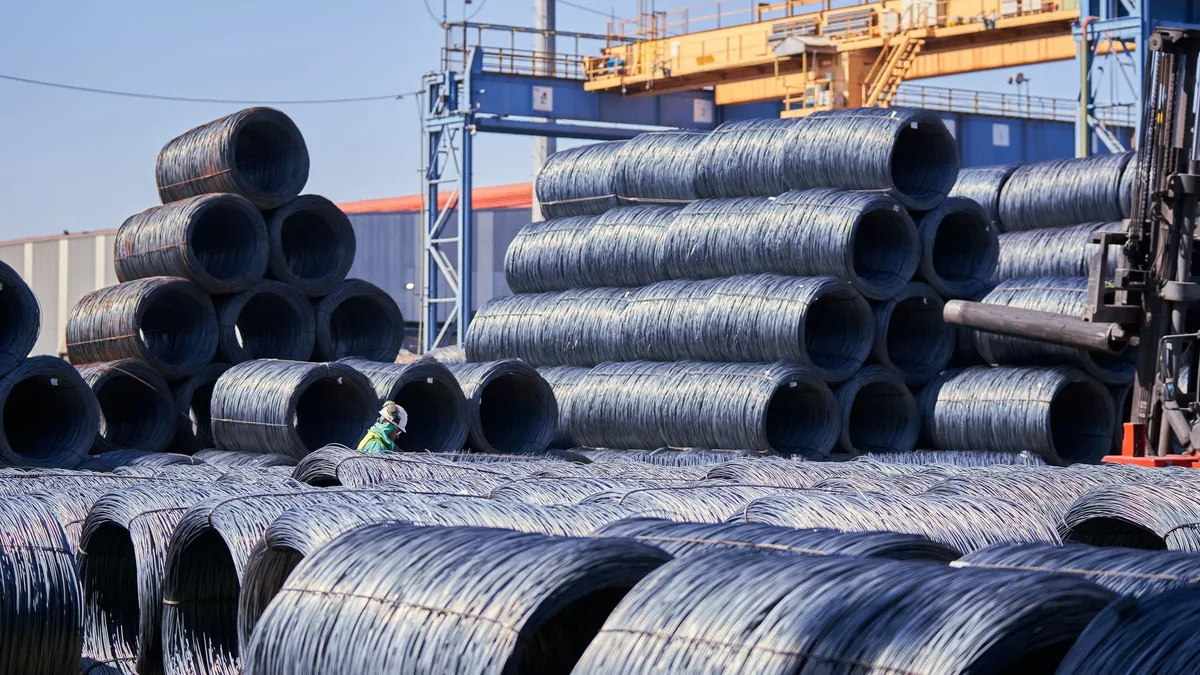
Order hardware parts in Dongguan and the material is steel and zinc alloy, roughly 40% to 50% of the selling price. Below a 30% deposit, the factory funds material out of its own pocket. It will not refuse the order. It will take it, then push your production slot back behind the buyers who paid more up front. When you chase and hear “the material hasn’t arrived”, that is sometimes literally true. These ratios are general manufacturing estimates; for any single factory, asking beats reading a table.
Order packaging in Yiwu and the paper comes in full rolls, one roll enough for several thousand boxes. The deposit has to cover the roll before the factory will schedule a dedicated print run and mix ink for your colour. Below that, you wait for someone else’s job to fill the roll, and your lead time moves.
Order electronic accessories in Shenzhen and the bill of materials is chips and PCBA, together more than half the selling price, with long chip lead times and suppliers who want cash. Deposits on these orders routinely run above 30%, and 50% is not unusual.
Tooling is priced separately. Mold and die costs usually do not follow a percentage at all — paid in full up front, or split 50/50 — because a completed mold is an asset sitting on the factory floor, and the factory is not worried you will walk away from it.
Four situations, four different floors. The way to find yours is to ask about material share, not to look for a convention.
When the Balance Is Due: Four Positions
| Trigger | Where the goods are | Distance from vessel | What you can still do |
|---|---|---|---|
| Inspection passed | Factory floor, not loaded | 5–10 days out | Demand rework, withhold payment, reject |
| Against B/L copy | On board | 1–3 days after sailing | Almost nothing but wait |
| On arrival | Destination terminal | 14–35 days at sea | Reject the cargo and absorb demurrage |
| After customs clearance | Cleared, collectable | 3–7 days after arrival | Whatever the unpaid balance is worth |
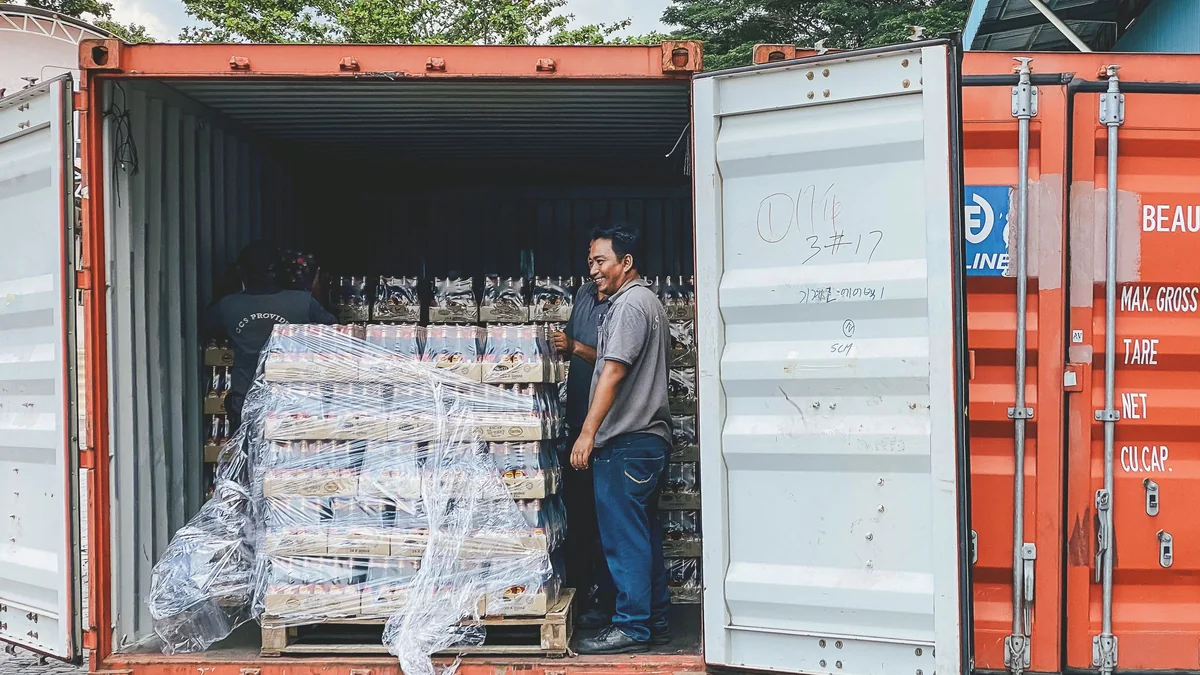
From inspection pass to B/L copy sits loading, trucking, export declaration and vessel booking: normally 5 to 10 days. From B/L copy to arrival, a fast vessel from China reaches the US West Coast in about two weeks; a European base port takes over a month.
Move the trigger one position later and your money sits outside your control for another two weeks to a month, while you lose one place where you could have stopped the shipment.
On a first order with a factory, tie the balance to inspection, not to sailing. That single change is worth more than a two-point concession on unit price.
An inspection report is only worth the trigger it creates. A report that arrives after the container is sealed documents a problem rather than preventing one. If the balance is tied to inspection, the sequence has to run: goods finished, inspection booked, report issued, you approve, payment released. Any version where the report lands after payment is a report, not a control. We covered how the sampling itself works in pre-shipment inspection in China.
DDP orders need one more split. A DDP quote bundles inland trucking, export declaration, ocean freight, destination charges, customs clearance and final delivery — six segments, each with its own payment point. Compressing them into “pay before shipment” bundles six risks into one and puts the whole bundle on you.
Who You Are Paying: Three Kinds of Accounts

Account verification is one rule: the bank account name, the company name on the business license, and the seller name on the PI must match exactly.
The corporate account
Exactly means character for character. An extra word, a missing bracket, simplified versus traditional characters, or 有限公司 rendered as 有限责任公司 all count as a mismatch.
The license itself is public. China’s National Enterprise Credit Information Publicity System lists the full registered name, the unified social credit code, the registered address, the incorporation date and the business scope. There is no fee to search it, and it takes a few minutes. If you want the step-by-step version, we wrote a separate guide on how to check a Chinese company’s business license before a deposit leaves your account.
The Hong Kong entity
Factories in the Pearl River Delta frequently collect foreign currency through a Hong Kong entity. That structure is legal and common, usually set up because the mainland entity cannot easily receive USD. What you need to confirm is whether the Hong Kong company and the mainland factory share the same beneficial owner. Ask for both registration documents and compare the shareholders and directors. A factory that provides them is usually fine. One that calls it confidential is telling you something.
The SWIFT code deserves a separate check. It identifies the bank, not the account, and a wrong branch code can route a payment into an account that then has to be recalled. Ask for the details in a PDF on company letterhead, then read the SWIFT code back to your own bank before confirming.
The personal account
A personal account is not a grey area. No legitimate Chinese company collects order payments into an individual’s account. Legally, you have paid a natural person rather than a company, and there is no enforceable contract between you and the factory. Catch it early and you can ask for the money back. Catch it late and your only route is a criminal complaint, which runs in years.
Four things should end the conversation:
- A request to pay a personal account or an individually owned business account
- A request to pay by WeChat Pay, Alipay or Western Union to an individual
- An email announcing a change of bank details shortly after the PI
- A beneficiary name that differs from the license by a single character
The fourth is the hardest to catch, because a single character is invisible in an email. Put the two names side by side.
What T/T, L/C and Platform Escrow Actually Cost
T/T is how most China trade actually moves. The fee is small: Bank of China’s published international settlement tariff is 1‰ of the remittance amount, with a floor of CNY 50 and a ceiling of CNY 1,000, plus a cable charge. What T/T does not provide is any protection. The moment the money lands, the only thing between you and the factory is a contract.
Which is why T/T risk control sits outside the transfer: inspection, staged shipments, a retained balance, a small trial order first. Those measures together are the control. The wire itself provides none.
The letter of credit
An L/C has a cost you can put on one page. Using DBS Bank’s published trade finance tariff as a reference: issuance commission 1/8% per month, minimum two months; SWIFT charge SGD 100; advising SGD 30; negotiation 1/8% flat; discrepancy handling USD 80 per set of documents.
On a USD 100,000 order, those add up to roughly USD 470, or 0.5% of order value.
On a USD 5,000 order, the same process runs with the same fixed charges, and the total is roughly USD 220 — 4.4% of order value.
That gap is the whole story. The threshold for a letter of credit is order size, because small orders cannot absorb the fixed cost.
| Method | Fee | Time to clear | Suitable order size | What you hold in a dispute |
|---|---|---|---|---|
| T/T | 1‰, floor CNY 50, ceiling CNY 1,000, plus cable charge | 1–3 business days | Any | A contract |
| Sight L/C | Issuance 1/8% per month, minimum 2 months, plus SWIFT, advising, negotiation, discrepancy | 5–10 business days | Above USD 50,000 | Documents |
| Platform escrow | Platform commission on transaction value, released on buyer confirmation | 1–3 days after confirmation | Standard products inside the platform | Platform rules |
One more thing about L/Cs that buyers misread: the bank examines documents, not goods. Correct documents with the wrong goods get paid. A single misspelled letter with the right goods can be refused. The International Chamber of Commerce’s publication No. 600 — UCP 600 — is the rulebook behind this, in force since 1 July 2007, and its 39 articles are what every issuing bank works from.
Platform escrow
Platform escrow has a boundary problem. It works inside the platform and stops working outside it. When a supplier proposes going offline to save the commission, what you save is a few points and what you give up is the entire dispute channel.
Price and Payment Terms Belong in the Same Conversation
A factory that moves on payment terms is moving its own cash flow, which means terms are tradeable against price — provided both are on the table in the same round.
Negotiate the unit price first and raise payment last, and the factory knows payment is your only remaining variable. It will hold there. Raise the payment structure during quotation and it has room to trade terms for price. Some factories will give up a point or two on unit price in exchange for a 50% deposit, because the deposit is cash flow to them and a discount to you. Whether that trade is worth it depends on what your own capital costs.
Comparing three quotes is where most buyers start, and the payment column is usually the last thing they read. Our guide to comparing supplier quotes from China treats the payment structure as part of the comparison rather than an afterthought.
Six Checks Before You Wire
One. Compare the account name to the full registered company name, character by character. Simplified versus traditional, brackets, 有限公司 versus 有限责任公司.
Two. Check the company address, phone number and email domain against the registry record. A factory using a free webmail address deserves a question about why.
Three. Confirm there is no account-change email. If one arrives, call the number you already had. Do not click a link in the email and do not use the new number it provides.
Four. Confirm the PI states the deposit percentage, the balance trigger, the price term and the lead time. No “we will settle the rest later”.
Five. Confirm the balance trigger reads inspection passed, not B/L copy.
Six. Confirm nobody is rushing you. Nobody saying the price only holds until today.
The fifth check is the one most often missed, because it is the only one you have to win before signing. The other five are verification. This one is a negotiation.
When None of This Applies
If you have worked with the same factory for three years and ship a dozen containers a year, most of these checks can be trimmed. In a long relationship the payment clause sets a rhythm rather than guards against fraud. Asking a five-year supplier for its business license will read as a problem, not as diligence.
If you are buying standard products on a platform, escrow already covers the dispute process. Adding an L/C on top means paying twice for one layer of protection.
If the order is only a few thousand dollars, any third-party intervention costs more than it protects. The right move there is to split the order and run a trial, not to add clauses.
The reverse case is worth naming: a large single order, a first-time counterparty, and a custom product, all three at once. That is where T/T stops being the best option, because the fixed cost of an L/C has been diluted enough to be worth paying.
Government tenders and commodity purchases usually have payment terms fixed by the tender document. You have no choice there. What matters is reading the document requirements in advance, so you do not discover a missing certificate at presentation.
The Clause Most PIs Leave Out
This is the section buyers skip, and it decides whether any of the earlier clauses mean anything.
Most PIs list product, quantity, unit price, lead time and payment method. Almost none state which country’s law governs the contract, or where a dispute gets resolved.
Without that line, if the factory does not ship or ships the wrong goods, your option is to sue where the factory is registered. Litigation runs in years, and legal fees plus travel routinely exceed the value of the order. That is why buyers with a strong case often walk away instead.
Two sentences fix it.
Governing law
The first names the governing law — “this agreement is governed by the laws of the People’s Republic of China”, or Singapore law, or your own jurisdiction. Which one you choose depends on where you could realistically enforce a judgment.
The forum
The second names the forum — arbitration before a named commission, or litigation in a named court.
Arbitration suits cross-border disputes of this size better than litigation, because awards are enforceable across borders under the New York Convention, to which both China and the United States are parties. The practical effect: win in arbitration and you can take the award to wherever the counterparty holds assets and apply for enforcement, without litigating the case a second time.
One practical note on choosing a forum: pick a place where the counterparty actually holds assets. An award from a commission the factory has never heard of is still enforceable, but enforcement takes time and a local lawyer. Hong Kong and Singapore are common choices for China trade because awards issued there are routinely enforced in mainland courts.
Neither sentence costs anything to add. Together they determine whether you have a route out of the worst case.
preguntas frecuentes
Is 30% deposit standard for Chinese suppliers?
It is a default, not a standard, and the difference matters: a default is what the other side proposes, a standard is what you can change. 30% is common because it covers material purchasing for most factories. Categories with a low material share can be negotiated to 20%; categories with a high material share cannot be done at 30%.
Can I negotiate payment terms with a Chinese factory?
Yes, but trade something for it. When a factory moves on payment terms it is moving cash flow, so what it wants in return is volume, a longer lead time, or a predictable reorder schedule. Saying “our company policy is 20% deposit” will usually get agreement, and the factory will recover the difference in unit price, lead time, or how cooperative it is during inspection.
What is the safest way to pay a Chinese supplier?
Separate the two risks. The safety of the money depends on account verification; the safety of the goods depends on where the balance trigger sits. Both can be handled without an L/C. The riskiest combination is an unverified account, a balance paid after sailing, and a contract you are counting on to rescue you.
Should I pay the balance against the bill of lading copy?
Not on a first order. A B/L copy means the goods are already on board, and at that point you have no lever at sea. On a second or third order it is reasonable, provided you have inspected two batches yourself rather than taking the factory’s word that it is consistent.
Is a Hong Kong bank account safe to pay?
The account is not the problem; the relationship behind it is. Pearl River Delta factories commonly collect foreign currency through a Hong Kong entity. What you need to establish is whether the two companies share the same beneficial owner. Ask for both sets of registration documents and compare shareholders and directors.
What happens if I pay a personal account by mistake?
Recovery routes are thin. Receiving payment into a personal account is not itself illegal in China, but you have paid a natural person rather than a company, and there is no enforceable contract between you and the factory. Reported early, you can request a return. Reported late, your only route is a criminal complaint, measured in years.
How We Handle This
On payment terms we verify; we do not collect or forward funds, and no money passes through us.
Three things specifically: we check the account name on the PI against the business license, we push the balance trigger from B/L copy to inspection passed, and we split the six cost segments inside a DDP quote so each one has its own payment point written down.
If you have a PI and a set of bank details in front of you, send them over and we will go through them before you wire anything.
More on sourcing strategy
- How to source products from China — the full ten-step process, from requirements to inspection
- China sourcing trends for 2026 — five trends reshaping cost, compliance and lead times
- Greater Bay Area sourcing data — what Dongguan, Foshan and Zhongshan output data actually means
Also worth reading: Lighting factory audit in Zhongshan — what a Zhongshan lighting audit actually tests.