


Three quotes on the desk. Same stainless steel tumbler, 5,000 units, three factories.
A: 2.85, FOB Shenzhen, mold 1,200 extra. B: 2.60, FOB Ningbo, mold 2,800 extra. C: 3.10, CIF Los Angeles, all in.
Half a dollar between the highest and the lowest. On 5,000 units that is 2,500 dollars. You circled B.
You circled too early.
B’s 2.60 is the price at the moment the goods go over the rail. C’s 3.10 is the price when they reach Los Angeles. Between those two numbers sits eleven thousand kilometres of ocean freight. A’s 2.85 also carries a 1,200-dollar mold invoice behind it. B’s carries 2,800.
Three numbers, three positions, three ways of counting.
Move them all to the same position and the arithmetic changes: A is 3.45, B is 3.60, C is 3.10. The one you circled is the most expensive of the three.
B did not cheat you. The product is new, so the tool has to be cut, 2,800 dollars, which is 0.56 a unit across 5,000. That number is on page two of the quote, in eight-point type.
Comparing supplier quotes from China is not reading three numbers down a column. Three separate documents have to be made to answer the same question.
Why Quotes Are Harder to Compare This Year
Since the autumn Canton Fair, quotes have been getting shorter.
Not shorter in content. Shorter in validity. Thirty days used to be normal. Now fifteen is common and seven is not unusual. One quote we saw had three lines on the front and five lines of small print on the back: raw material fluctuations to be renegotiated, exchange rate changes to be renegotiated, freight to be calculated at actual sailing date.
Factories did not suddenly become cautious. Three things have been moving this year.
Start with the exchange rate. On 30 October 2026 the USD/CNY central parity rate was 6.7138, published by the People’s Bank of China through the China Foreign Exchange Trade System. That number moves every day, and a quote has to hold for three to six months. The factory collects dollars, pays wages and buys material in renminbi. Signing that price means carrying the currency risk on your behalf. When it cannot carry it, it writes a line into the notes.
Then tariffs. The Section 301 lists and exclusions keep moving. A DDP quote that says “duty included” today may not be true next month. Ask the salesperson which duties are included and you get “the tax”; ask again and you get “I need to check with the boss”. It is not deliberate vagueness. They do not know the rate two months out either.
And freight. Same route, same container size, two months apart, and the difference can be substantial.
All three moving at once means quotes can no longer be written as cleanly as they used to be.
Six Questions Every Quote Should Answer
Quote formats differ from factory to factory. A quote needs to say only six things.
What is included in this price. What volume it holds at. What the one-time costs are. When it stops being valid. Who carries the risk. Which currency it is calculated in.
Go through them factory by factory and you will find most quotes answer only the first.
The first two matter most. The last four are for catching leaks. Whichever one is missing is where the money leaks out.
Question One: What Is Included in This Price
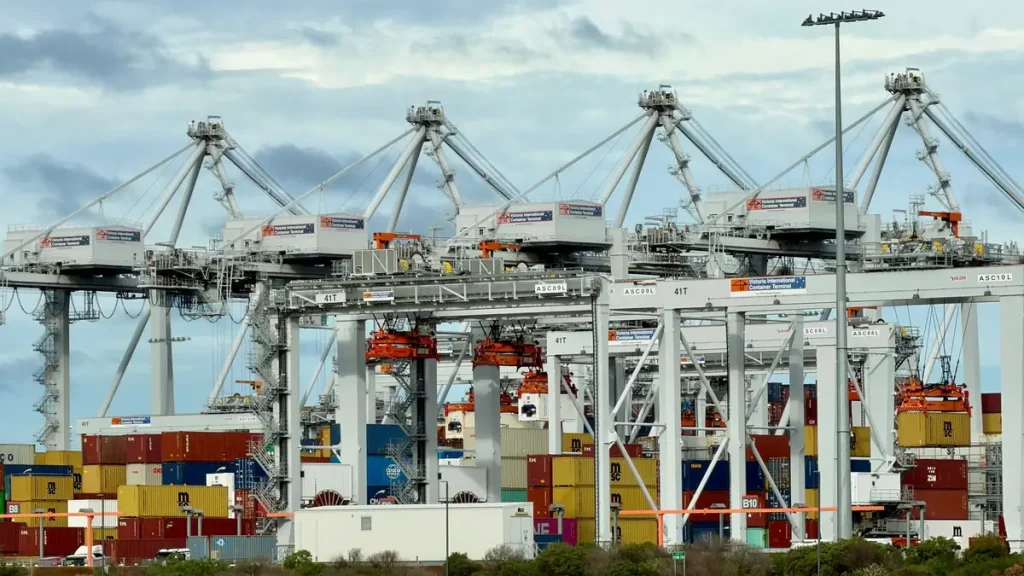
Every quote has a unit price line. Look at what follows it: one says EXW, one says FOB Shenzhen, one says CIF Los Angeles.
These three terms describe three points along the same road. EXW means the goods are still at the factory gate. FOB means they are on board. CIF means they have arrived at the destination port. In between sit inland trucking, export declaration, terminal handling, ocean freight and insurance.
The gap can be estimated. A 20GP from Shenzhen to Los Angeles at 1,800 dollars in freight and surcharges, carrying 5,000 tumblers, works out to 0.36 a unit. That is the distance between FOB and CIF, and it grows in peak season. For a fuller breakdown of what each term covers, see our guide to sea freight from China.
There is a second split, less visible: whether tax is included.
China refunds export VAT. Factories quote tax-inclusive and tax-exclusive as two separate price systems, and “including VAT” versus “excluding VAT” looks like a 13% difference on paper. Most of that 13% comes back on export, so a tax-inclusive price is not the same thing as paying 13% more.
Three questions settle it: is VAT in this price, who claims the refund, and who absorbs the difference if the refund rate changes.
Without those three answered, a 5% gap between two unit prices tells you nothing. You cannot tell whether one factory is cheaper or whether the two quotes are describing different transactions. This is where most supplier quotes from China fail first.
Question Two: What Volume Does This Price Hold At
Unit prices usually come with a bracket after them: (MOQ 3,000). That bracket means the price holds at 3,000 units. Order 5,000 and you have to ask again. Order 10,000 and you ask a third time.
The most common mistake is laying two quotes side by side without checking the volume behind each one. The 1,000-unit quote says 3.10, the 10,000-unit quote says 2.40, and you conclude the second factory is more efficient. You have compared two different transactions.
The fix takes one sentence: put every quote at the volume you actually intend to order, and ask again.
There is also a step worth calculating. Many factories price in tiers: 1,000 / 3,000 / 5,000 / 10,000. Your plan is 4,800 units, just under the 5,000 line. Adding 200 units can drop the unit price by 5% and lower the total. No quote will point this out. It is arithmetic you do yourself.
Question Three: How Much Are the One-Time Costs
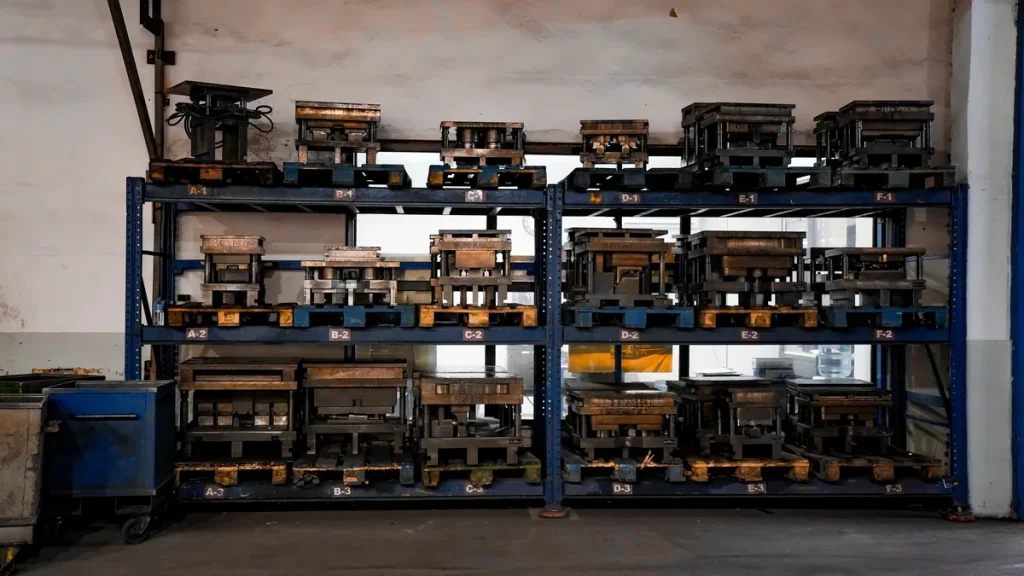
Turn to the last page of the quote and there are usually a few small lines: Mold: USD 2,800. Below that, Sample, Certification, Printing plate, a few hundred dollars each.
This money is not optional. It is part of what this order costs. It is just not charged per unit.
So spread it.
Total one-time costs divided by order quantity gives the per-unit share. 2,800 divided by 5,000 is 0.56.
The smaller the order, the heavier this line gets. On 500 units, a 2,800-dollar mold is 5.60 a unit, more than the product itself. This is why small orders are the hardest to compare: one-time costs eat more than half the total, and the unit price stops being the deciding number.
There is a second question after the arithmetic: once the mold is paid for, who owns it.
Three common arrangements. Paid once, free to use afterwards. Paid once, then a maintenance fee per order. Paid up front, refunded in instalments against order volume. All three may read “mold fee: USD 2,800” on the quote. The real cost is not the same.
When you change suppliers, this becomes the most expensive line in the file. The mold sits in their factory. You either keep ordering or you cut a new tool.
Question Four: When Does It Expire

Three quotes. One says valid for 30 days, one says valid for 7 days, one says nothing at all.
A short validity means the factory does not want to carry the risk of that period. The risk does not disappear. It moves to your side: either you decide within seven days, or you accept a re-quote.
Lead time needs a starting point. “35 days” measured from deposit, from sample approval, or from scheduling can differ by two or three weeks in practice. Which one the factory means has to be written down.
Payment terms are a smaller number, but they lock in your timing.
Thirty percent deposit with seventy percent against the bill of lading copy, fifty-fifty with the balance before shipment, twenty percent with eighty against the B/L. The financing cost barely differs. At 6% annualised, on 5,000 units at 3 dollars, a 50% deposit ties up about 45 dollars more than a 20% deposit, under a cent a unit.
The money is negligible. The commitment is not. Once the deposit leaves, your room to negotiate leaves with it. If you want the longer version of this, our guide to payment terms with Chinese suppliers covers the account and timing details.
Question Five: Who Carries the Risk
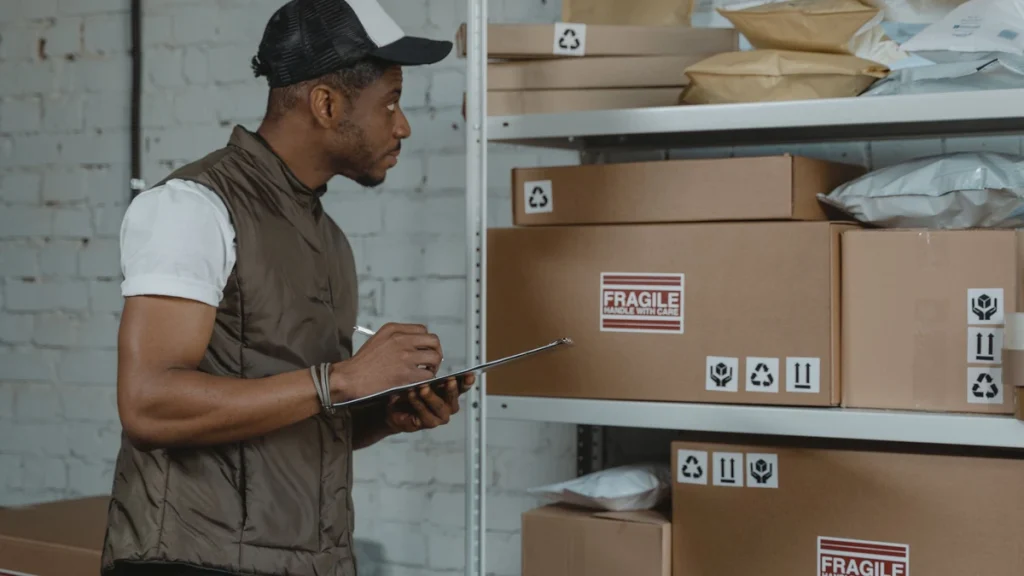
The quote says nothing. So does the contract.
Nothing written means the factory carries it by default. When the factory cannot carry it, you get a price increase at the last minute, or a message saying raw material went up after the goods are already made.
Three things need to be settled before you confirm the price.
Raw material is the easiest to negotiate. Copper, aluminium, plastic, steel, any volatile input, agree a threshold: beyond a certain percentage movement, the price is reopened; inside it, the original price holds. Without that clause you accept increases and never see a refund when the market falls.
Currency is covered in the next section.
The one most often missed is examination and demurrage. DDP quotes routinely skip it. Exam fees, devanning, detention, demurrage: who pays, and up to what point. Customs clearance itself is not expensive. The days it does not happen are. We break that down in our article on customs clearance from China, but the short version belongs here: DDP on a quote does not mean every cost after arrival has an owner.
Question Six: Which Currency, at What Rate

One quote is in USD. One is in RMB. One is in USD with a small note: exchange rate 7.00.
On 30 October 2026 the USD/CNY central parity rate was 6.7138. A factory converting at 7.00 has built a 4% buffer into the unit price. If you do not see that note, you will read it as 4% more expensive than the next quote when the underlying cost is identical.
The arithmetic is simple. RMB unit price divided by the rate used in the quote gives the dollar price. At 6.7138 and at 7.00, the same 18.80 RMB becomes 2.80 dollars and 2.69 dollars.
Two ways to handle it. Have the factory write “USD price based on USD/CNY 6.90” so the basis is fixed, or ask for the RMB price and convert at the central parity rate yourself. The second is cleaner, but the currency risk moves to you. When the renminbi strengthens, the side receiving dollars gains and the factory quoting in dollars loses. Reverse it when the renminbi weakens.
This is the line most often skipped. People who skip it find a 4% gap at reconciliation six months later and spend two days working out where it came from.
Six Questions In, Three Prices Become One
Back to the three supplier quotes from China we started with. With all six answered and spread across 5,000 units:
| Factory A | Factory B | Factory C | |
|---|---|---|---|
| Quoted unit price | 2.85 | 2.60 | 3.10 |
| Trade term | FOB Shenzhen | FOB Ningbo | CIF Los Angeles |
| Mold cost | 1,200 (0.24/unit) | 2,800 (0.56/unit) | included |
| Packaging | included | 0.08/unit | included |
| Freight share | 0.36 | 0.36 | included |
| Tax effect | ≈0 | ≈0 | ≈0 |
| Real unit cost | 3.45 | 3.60 | 3.10 |
The tax line is close to zero for all three because the export refund brings tax-inclusive and tax-exclusive prices close together. It appears here only to show you asked the question. Not every factory gets the full refund.
C is the cheapest. B is the most expensive. The 2.60 on B’s quote is the smallest of the three numbers and the highest of the three costs.
The conclusion does not run the other way. Change the order volume and it flips: 2,800 spread across 5,000 units is 0.56, spread across 20,000 it is 0.14, and B moves from most expensive to the middle.
What makes the table worth keeping is that you can run it again.
The calculation in one sentence: spread every cost that is not charged per unit across the units, then add it to the price.
Written as a formula:
Real unit cost = quoted price + one-time costs ÷ quantity + freight per unit + tax per unit + financing cost per unit
These figures are an example. Yours will differ. The method does not.
Three Things the Quote Cannot Tell You
After the table is done, you may still choose the more expensive factory. Three reasons, none of them on paper.
Capacity. Whether the factory can finish inside your lead time. Ask if 35 days works and the answer is yes. Ask how far into the month production is booked and the answer is that it is full; your order goes in behind. A factory that can answer the second question is tracking its schedule. One that cannot is guessing at lead times.
Technical fit. Whether they have made this product before. First time round, the sample passes and mass production develops problems. A process run for three years and a process run for the first time produce very different yields. A factory visit shows this faster than any document: the cartons stacked in the workshop, the molds sitting on the rack, whether either looks like your product. If a visit is not practical, a factory audit in China covers the same ground.
Responsiveness. Whether they will handle artwork changes, packaging changes, an urgent top-up order. Nothing on the quote shows this. Email speed, how concretely they answer technical questions, whether they will send a sample first — that is where it shows.
When the three quotes sit within 5% of each other, these three matter more than the price.
When This Table Does Not Apply
Four situations where calculating a real unit cost wastes your time.
Sample orders. A few dozen units, one-time costs above half the total, and the amortised number tells you nothing. Look at the total, and at who is willing to take the job.
Exclusive custom work. One factory can make it, there is nothing to compare, and the table is you competing against yourself.
Long-term framework agreements. The price is already settled; what you compare is execution. On-time rate, batch consistency, how they handle a problem. Look at the last six months, not at the quote.
Urgent replenishment. Time first, price second. The question becomes which factory can ship soonest, not which is cheaper.
Four Things to Do This Month
First, take every quote currently on your desk and refill it against the six questions. Mark the blanks in red. Do not guess.
Second, ask the blanks in one message. Split across five emails and the factory gets annoyed and you forget one.
Third, calculate the real unit cost and write down the volume you used. The table only holds at that volume; change the quantity and run it again.
Fourth, once the price is confirmed, put four sentences into the PI or the contract: who owns the mold, the date the price expires, the threshold for a raw material adjustment, and who pays exam and demurrage costs.
Without those four sentences, the six questions were an exercise.
preguntas frecuentes
The factory will not fill in this much detail. What then?
Separate unwilling from unable. At smaller factories the quote is often dictated by the owner and typed by a salesperson, with no template behind it. Send them a table and they usually fill it in. A refusal is also information: not every factory that declines has a problem, but the vaguer the quote, the more likely the argument later.
The price on the quote and the price on the PI do not match. Is that normal?
Common, but find out why. Three causes: items that were not costed earlier (mold, packaging, certification), a changed exchange rate basis, or a different quantity tier. The first two belong in writing on the PI. The third means the quantity was not clear when you asked.
Is a low price suspicious?
No. A low price can mean efficiency, spare capacity, or a factory buying its first order. A low price attached to a vague quote is the combination to look at. Price alone tells you little; whether the factory can explain its own cost structure tells you more.
Should I re-check a DDP quote myself?
Yes. DDP bundles every variable into one number, and you cannot see the bundling. Pull it apart with five questions: is duty included, is the Section 301 port fee included, who pays exam and demurrage, how many free days at destination, and who is the importer of record. Answer those five and two DDP quotes can finally sit side by side.
Final Thoughts
Three quotes, three numbers, one number at the end. Supplier quotes from China go wrong here, months before the order is placed. The steps in between take two hours the first time and twenty minutes once you know them.
Most people skip the two hours and find the 2,800 dollars three months later.
We do not run freight and we do not negotiate your price with the factory. What we do is put the numbers on one sheet: duty included or not, the Section 301 port fee, exam and demurrage, free days at destination, who is the importer of record. The factory is still your choice. You just know what you are choosing. If that is the part you want handled, our third-party sourcing and coordination service is where to start.
More on sourcing strategy
- Negotiating MOQ down — five ways to bring the minimum order down
- Payment terms with Chinese suppliers — deposit timing, account types and the red flags before you wire
- How to source products from China — the full ten-step process, from requirements to inspection
Also worth reading: Checking a Chinese business licence — five steps to verify a licence before you pay.